
Sig Sauer TANGO MSR LPVO Scope 1–6x24mm Review (I Have Tested)

I’ve been spending quite a bit of time lately testing the Sig Sauer TANGO MSR 1–6x24mm LPVO, bringing it with me on multiple range trips alongside some significantly more expensive optics like Nightforce and other premium LPVOs. That actually made this review more interesting, because instead of judging it in isolation, I got to see how this budget-friendly scope performs side by side with high-end glass in real shooting situations—not just based on specs or marketing claims.
First Impressions at the Range
Right out of the box, the first thing I noticed is that the optic is very straightforward. Nothing flashy, nothing overcomplicated. You get the scope, mount, and basic accessories like lens caps—but I’ll be honest, I don’t really care much about those.
What matters more is how it performs once it’s actually on a rifle. And surprisingly, for the price point, it immediately felt usable.
Eye Relief, Eye Box, and Glass Clarity
These are the three things I always pay attention to first on any LPVO:
Eye Relief
The advertised eye relief is about 3.9 inches, and in my experience, that’s pretty accurate. I didn’t run into any weird head positioning issues. It felt forgiving enough for fast shooting positions, which is exactly what you want from a 1–6x optic.
Eye Box
The eye box is decent—not ultra forgiving like top-tier $2,000 optics, but absolutely workable. For a scope in this price range, I don’t have major complaints here.
Glass Clarity
The glass is good for the money, but I need to be very clear here:
It is not Nightforce-level glass. It’s not even in that conversation.
But it also doesn’t need to be.
For what it costs, the clarity is solid enough for practical shooting, target engagement, and general use.
Magnification Throw Lever and Adjustments
The magnification ring is one of the more interesting parts of this optic.
It’s:
-
Smooth enough to turn
-
But also very stiff
Personally, I find it a little too stiff. I prefer a slightly faster throw, especially when transitioning between 1x and higher magnification quickly.
That said, there are some nice touches:
-
The knurling is excellent
-
The included throw lever feels solid
-
The fiber-optic-style indicator on the lever is actually useful in low light
At 1x, the throw is around a 90-degree position on one side, and at 6x, it’s roughly 90 degrees the other way. That’s worth noting if you’re running offset sights.
Reticle Design and Illumination
This optic uses a second focal plane (SFP) reticle, which means the reticle size does not change as you zoom.
That also means:
-
Holdovers are only truly accurate at max magnification
-
You can still use them at lower magnification, but they are less precise
Reticle Breakdown
What I actually like about the reticle is its simplicity and usability:
-
A 1 MOA center dot
-
A “donut of death” style ring
-
Holdover markings for distance
-
Windage indicators on the horizontal axis
-
Ranging-style bars for longer distances (300–800 yards)
When illuminated, only the key aiming elements light up, not the entire reticle. I actually prefer this. I don’t like full reticle glow—it tends to clutter the sight picture.
One thing I did notice, however, is a small extra illuminated dot around the mid-range markings. That might just be this individual unit, but it stood out.
Turrets and Adjustments
The windage and elevation turrets are:
-
Capped
-
0.5 MOA per click
-
Fairly stiff
-
Very solid with no wobble
I actually like the tactile feel here. They’re not mushy, and they feel secure.
One thing I appreciate is the clear direction markings (UP and RIGHT) engraved on the body. That makes adjustments easier without breaking shooting position.
However, one downside is that these turrets are not really designed for constant resetting to zero. Once set, they’re more “set and forget.”
Illumination and Battery
The illumination system runs on a CR2032 battery, which is standard and easy to replace.
There are 11 brightness settings, but:
-
There is no dedicated off position between settings
-
Illumination gets close to daylight bright, but not quite true red-dot bright in full sun
For a sub-$500 LPVO, though, this is expected and acceptable.
Mount and Build Quality
One of the biggest value points here is that the mount is included, which immediately increases the appeal of this optic.
The mount itself includes:
-
Torque specs engraved on it
-
Solid construction
-
A leveling reference line built into the design
That leveling line is actually something I didn’t expect. At first, I wasn’t even sure what it was for—but it helps ensure your scope is aligned properly during mounting. It’s a small detail, but a useful one.
The optic uses a 30mm tube, which is standard for this category.
Field of View
-
At 1x: ~124 ft
-
At 6x: ~19 ft
For a 1–6x optic, these numbers are perfectly respectable. Nothing revolutionary, but absolutely serviceable for both close and mid-range shooting.
Real Range Performance
I didn’t go crazy with round count—ammo is expensive and time is limited—but I did enough to get a solid feel for it.
My testing included:
-
Low ready drills
-
Target transitions
-
Shooting at multiple magnifications
-
Engagements from close range out to a few hundred yards
Everything performed consistently.
No tracking issues. No zero wandering. No mechanical problems.
One Honest Limitation: Magnification at Distance
At 100 yards and beyond, especially past 200–300 yards, I personally missed having more magnification.
At 6x:
-
It’s usable
-
It’s fine for most shooters
-
But it’s not “reach out and pick details apart” level clarity
I’ve been spoiled lately testing 1–8x and 1–10x optics, so going back to 1–6x reminded me of that limitation quickly.
If your eyesight isn’t great or you plan on doing more precision distance shooting, you might want to step up in magnification range.
Sig Sauer TANGO MSR LPVO Scope 1–6x24mm: Pros & Cons
|
Pros |
Cons |
|
Strong value for money |
Magnification throw is a bit too stiff for my taste |
|
Mount included (huge plus) |
No true “off” position on illumination dial |
|
Practical and usable reticle |
Glass is good but not premium |
|
Good eye relief |
Second focal plane limits holdover flexibility |
|
Decent eye box for the price |
6x magnification feels a bit limiting at distance |
|
Solid build quality |
|
|
Useful illumination system |
|
|
Thoughtful features like the leveling reference line |
Sig Sauer Tango MSR vs Odin ED 1–6×28 FFP: My Real-World Comparison
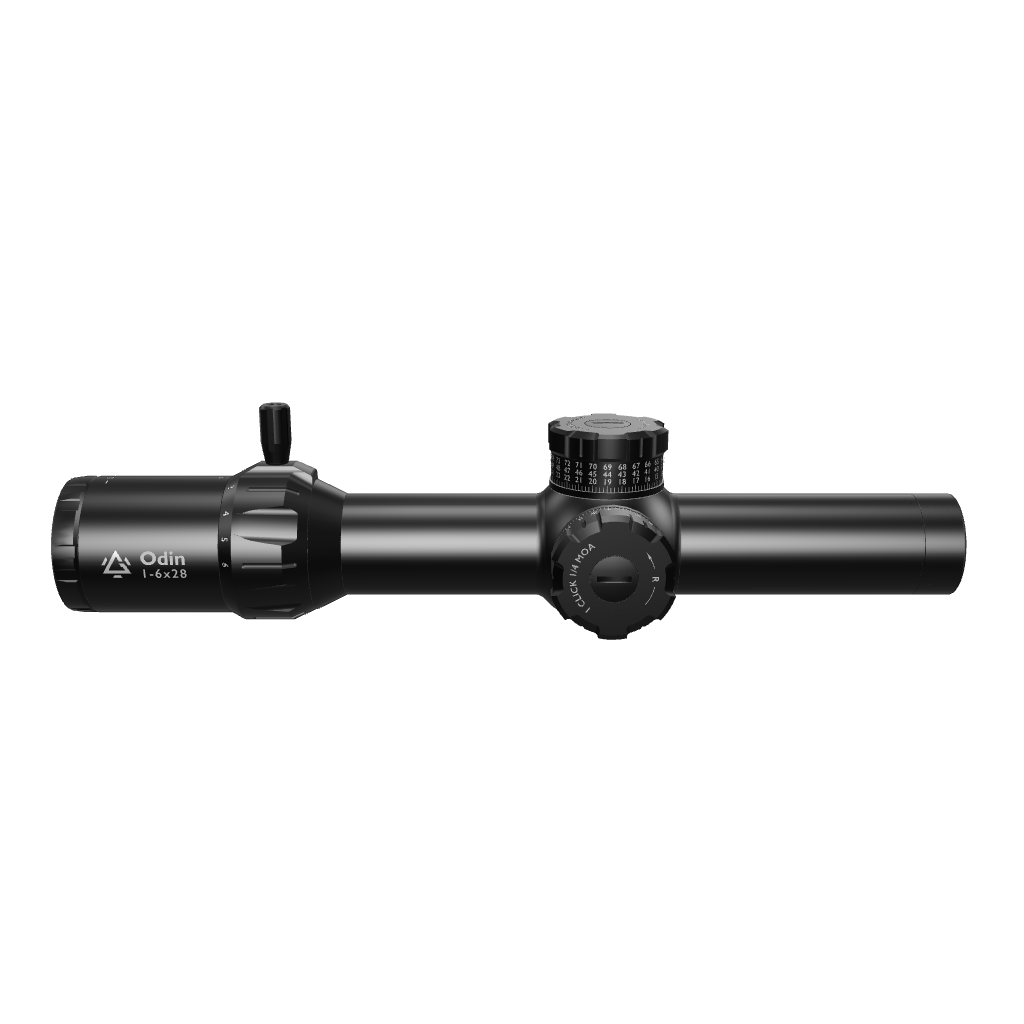
I want to share my honest experience comparing two budget LPVOs I’ve actually spent time shooting: the Sig Sauer Tango MSR 1–6x24mm and the Odin ED 1–6×28 FFP LPVO from Gunnr. Both sit in a similar price range, but in real use they feel like two completely different design philosophies.
1x Performance
When I’m shooting at 1x, what matters most to me is speed and simplicity. This is where the Sig Tango MSR immediately feels more natural. The 1x is clean, the sight picture is straightforward, and I don’t have to think about where the reticle is. I can mount the rifle, pick up the dot, and shoot fast without hesitation.
With the Odin ED, the story is different. Even though the glass itself is good, the 1x feels slightly more “processed” or magnified, and the FFP reticle becomes very small at this setting. In practice, that means I sometimes need an extra moment to find the center aiming point. It’s not unusable, but it’s definitely not as instinctive as the Sig.
Reticle Usability
The reticle design really highlights the difference between these two optics. The Sig MSR uses a simple, easy-to-understand reticle with a clear illuminated center. It stays visible and usable at all magnifications, and I never feel like I need to “decode” it under pressure.
The Odin ED, being the first focal plane, gives me a much more advanced reticle system with holdovers and ranging features that become very useful at higher magnification. At 6x, it actually works very well and feels more capable for distance shooting. However, at 1x, that same reticle becomes so small that it loses speed advantage, which is something I notice immediately when transitioning between targets.
6x Magnification
At higher magnification, the Odin ED starts to shine. The glass clarity is noticeably better at 6x, and I get more detail when identifying targets at distance. It feels like this optic is designed to perform best once you actually zoom in and use it at mid-range distances.
The Sig Tango MSR, on the other hand, remains solid but more basic. It does the job, but it doesn’t give me the same level of clarity or precision when I start pushing distance. It feels more like a general-purpose optic, while the Odin leans more toward distance capability.
Eye Relief and Eye Box
The Sig MSR is more forgiving in almost every shooting position. The eye box is easy to work with, and I don’t need to be perfectly positioned behind the optic to get a clear sight picture. This makes it faster and more user-friendly, especially under stress or movement.
The Odin ED requires a bit more attention to setup. The eye relief feels longer, and I often find myself adjusting my stock position slightly to get the perfect sight picture. Once set up correctly, it performs well, but it is not as forgiving as the Sig in quick, dynamic shooting.
Overall Design
After using both optics, I see a clear difference in intent. The Sig Tango MSR feels like a traditional, no-nonsense LPVO built for simplicity and reliability. It prioritizes fast 1x performance, ease of use, and a clean shooting experience without overcomplicating things.
The Odin ED, however, feels like a more feature-driven optic. It tries to give me better glass, a more advanced reticle system, and stronger long-range capability at the cost of simplicity. It is more capable on paper and at distance, but it is also more demanding in real-world use.
Sig Sauer Tango MSR vs Odin ED 1–6×28 FFP: Which One I Would Choose
If I had to choose one for general use, I would personally lean toward the Sig Tango MSR. It is faster at 1x, more forgiving, and easier to run in most real-world shooting situations. It just feels more natural as an LPVO.
However, if my focus shifts more toward mid-range shooting and I care more about glass clarity and advanced reticle features at 6x, then the Odin ED 1–6×28 FFP becomes more interesting. It rewards precision and deliberate shooting, especially beyond 200–300 yards.
In the end, I see it like this: the Sig is the better “grab-and-go” LPVO, while the Odin is the more capable “distance-focused” budget optic—just with a slightly steeper learning curve at 1x.