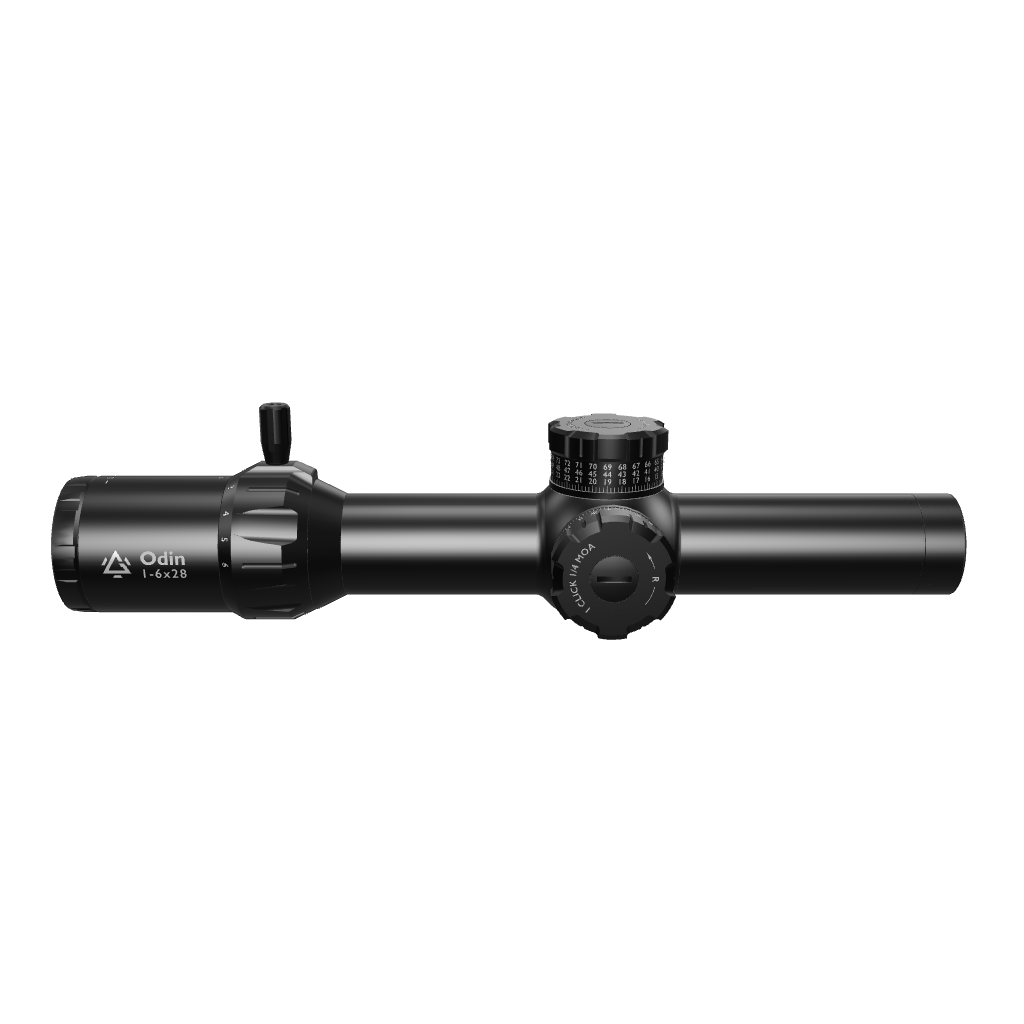
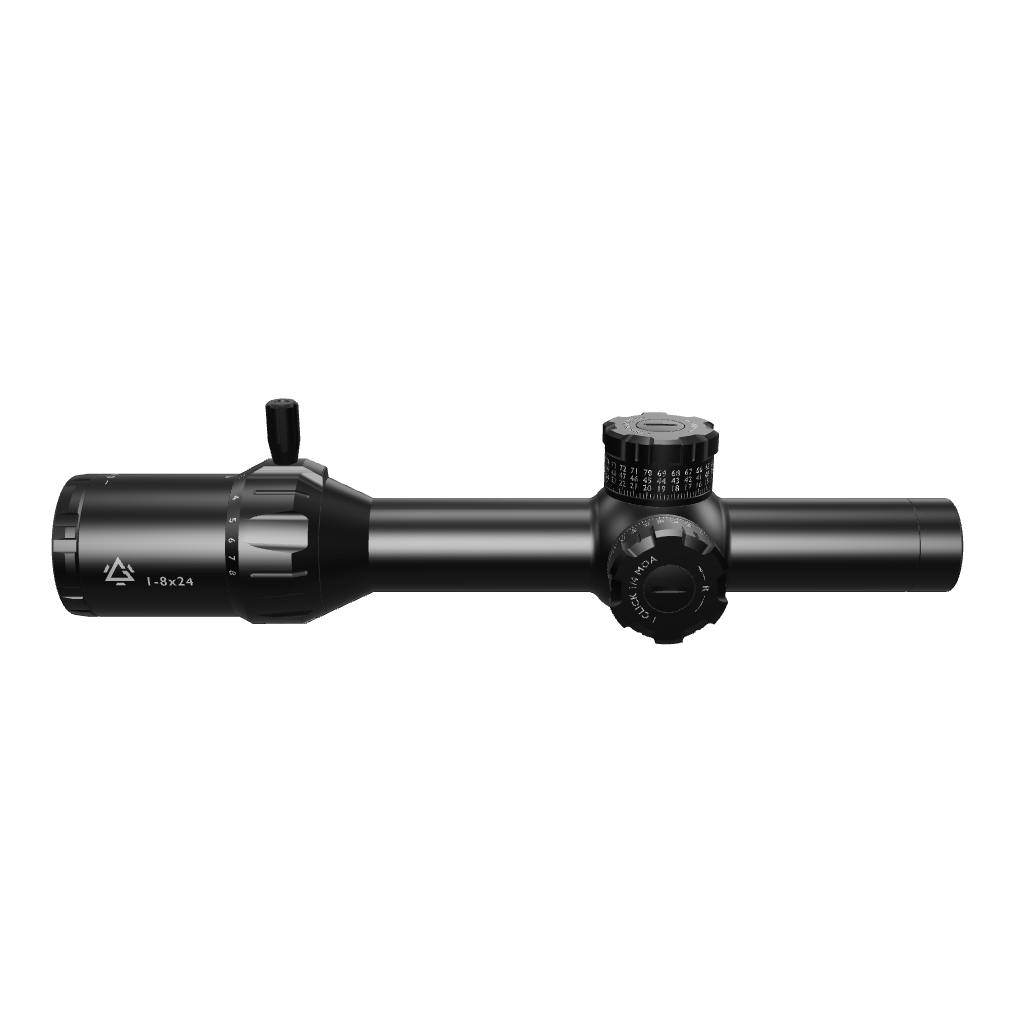
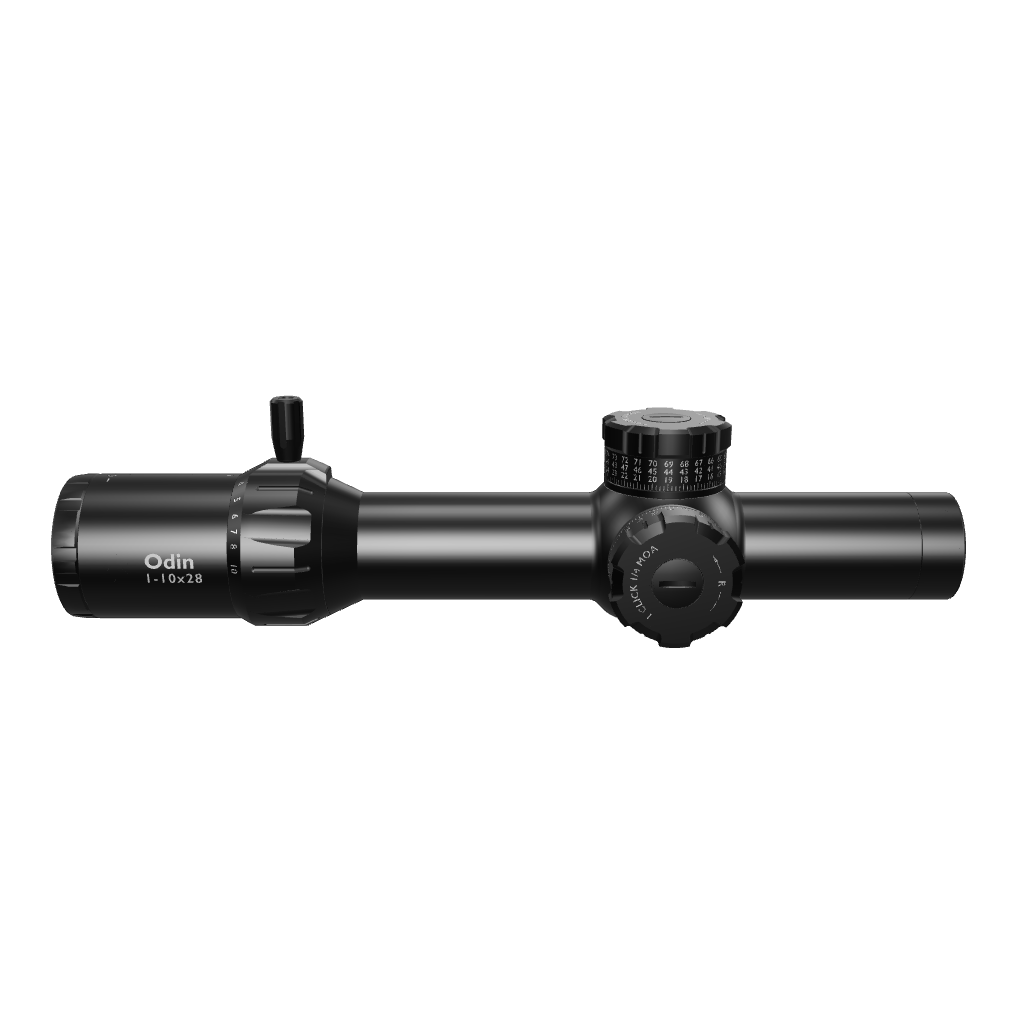
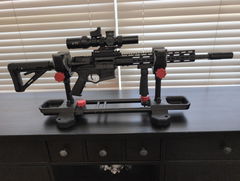
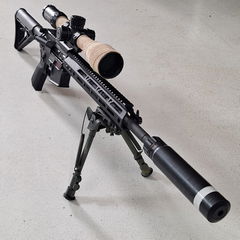
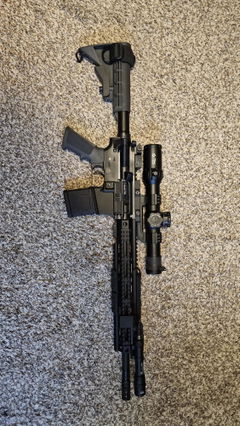
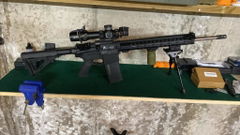
Choosing an LPVO (Low Power Variable Optic) can feel overwhelming at first because there are many options, features, and specifications to compare. From magnification ranges like 1-4x, 1-6x, 1-8x, and 1-10x, to focal planes, reticle designs, illumination, and mounting systems—each factor affects how the optic performs in real-world use.
This guide breaks down the key factors step by step so you can understand what really matters—and avoid paying for features you don’t need while still getting the performance that fits your use case.
Magnification Power
When selecting a Low Power Variable Optic (LPVO), magnification range is one of the most important factors because it directly determines how versatile your setup will be. The right choice depends on your shooting distance, speed requirements, and overall use case—whether that’s tactical shooting, hunting, or competition.
If your priority is speed and simplicity, lower magnification like 1-4x works well. If you want a balanced, all-purpose optic, 1-6x is the most recommended option. As you move into 1-8x and beyond, you gain better long-range capability—but with increased cost, weight, and complexity.
1-4x LPVO
A 1-4x LPVO is ideal for close-range shooting and fast target acquisition, typically within 0 to 300 yards. At true 1x, it functions similarly to a red dot, allowing both-eyes-open shooting with excellent situational awareness. The 4x upper range provides enough magnification for basic mid-range accuracy without slowing you down.
This magnification range is lightweight, simple, and usually more affordable, making it a great entry-level option. However, it starts to feel limited when you push beyond 300 yards, especially for target identification and precision.
1-6x LPVO
The 1-6x LPVO is widely considered the “sweet spot” for most shooters. It offers an excellent balance between speed and versatility, covering distances from point-blank out to around 500 yards.
At 1x, you still get a near red-dot-like experience, while 6x provides a noticeable improvement in target clarity and precision over 4x. This range is popular for its adaptability—it works well for tactical applications, hunting, and even competition shooting. For many users, this is the most practical “do-it-all” option.
1-8x LPVO
Stepping up to 1-8x gives you better performance at extended distances, typically up to 600 yards. The extra magnification helps with target identification and more precise shot placement, which is especially useful in competitions like 3-Gun or in mixed-distance environments.
However, this added performance comes with trade-offs. These optics are generally more expensive, heavier, and require higher-quality glass to maintain clarity across the zoom range. In lower-end models, the 1x performance may not feel as natural as it does on a 1-6x scope.
1-10x LPVO
A 1-10x LPVO represents the high end of the category, offering a very wide magnification range that can stretch from close-quarters shooting out to around 800 yards. It begins to overlap with traditional mid-range rifle scopes in terms of capability.
This range is ideal for shooters who want maximum flexibility in a single optic. However, the complexity of achieving both a true 1x and a clear 10x means these scopes are often expensive and heavier. Lower-quality models may struggle with distortion, edge clarity, or a less effective 1x experience.
1-12x LPVO
Although less common, 1-12x LPVOs push even further into long-range territory. They are designed for users who prioritize distance performance while still retaining some level of close-range usability.
That said, at this level, the optic starts to move away from the core LPVO concept. The 1x performance is typically less refined, and the overall design leans more toward designated marksman rifle (DMR) applications rather than fast, close-quarters shooting.
2-10x LPVO
Technically, a 2-10x scope isn’t a true LPVO because it lacks a 1x setting. However, it is often considered alongside LPVOs due to its similar role in bridging mid- and long-range shooting.
Without 1x, you lose the ability to shoot quickly at close range like a red dot. In exchange, you get a more stable and often clearer image for distances between 100 and 800 yards. This makes it a strong choice for hunting or precision-focused shooting where close-range speed is less important.
Focal Plane: FFP vs SFP LPVO
When choosing an LPVO, understanding the focal plane is just as important as magnification. The two main options—SFP (Second Focal Plane) and FFP (First Focal Plane)—affect how your reticle behaves as you change magnification, which directly impacts accuracy, usability, and shooting style.
SFP (Second Focal Plane) LPVO
In an SFP LPVO scope, the reticle stays the same size regardless of magnification. Whether you are at 1x or 6x, the reticle looks identical to your eye.
This design means that any holdover or ranging marks in the reticle are only accurate at a specific magnification (usually the highest setting, like 6x or 8x). If you change magnification, those markings no longer represent true values.
FFP (First Focal Plane) LPVO
In an FFP LPVO scope, the reticle changes size as you zoom in and out. As magnification increases, the reticle grows; as you zoom out, it shrinks.
The key benefit is that the reticle markings remain accurate at every magnification level. This means your holdovers, wind corrections, and ranging estimates always work correctly, no matter what zoom you’re using.
SFP vs FFP: Which Should You Choose?
For most users—especially beginners or those wanting a general-purpose LPVO—SFP is the more practical and user-friendly choice. It aligns well with how LPVOs are commonly used: fast, intuitive, and effective at short to mid-range distances.
However, if your shooting style involves more technical adjustments and varied distances, investing in an FFP LPVO can unlock greater precision and flexibility.
Reticle & Illumination
When choosing an LPVO, don’t overlook the reticle and illumination—they directly affect real-world performance. A daylight bright illuminated reticle is essential if you want true red dot–like speed at 1x, while a well-designed reticle with both a bold center and usable subtensions ensures you can still shoot accurately at distance.
Weight
Lighter LPVOs, typically found in lower magnification ranges like 1-4x or 1-6x, are easier to carry and handle, making them ideal for hunting, patrol use, or fast-moving shooting scenarios where agility matters most.
Heavier scopes, such as 1-8x or 1-10x models, tend to include more complex optical systems and deliver better long-range performance, but they can feel more front-heavy on a rifle during extended use.
Durability
Beyond weight, durability is critical—look for scopes that are nitrogen- or argon-purged for waterproof and fogproof performance, as well as shockproof construction to ensure they can withstand recoil and harsh field conditions without losing zero.
Mounting System
A solid mounting system ensures proper eye relief, consistent zero, and comfortable shooting across all magnification levels. For AR-15 style rifles, a high-quality cantilever mount is the standard choice. This design extends the scope forward, allowing proper eye relief while maintaining a comfortable shooting position behind the rifle. A reliable mount is essential to ensure stability and optimal LPVO performance.
Different shooting environments demand different priorities—speed, clarity, durability, or long-range precision. Matching the optic to how you’ll actually use it will give you far better results than chasing maximum magnification alone.
Common Use
Different shooting environments demand different priorities—speed, clarity, durability, or long-range precision. Matching the optic to how you’ll actually use it will give you far better results than chasing maximum magnification alone.
Competition / 3-Gun
For competition shooting such as 3-Gun, the priority is speed, transitions, and target acquisition under pressure. Most shooters in this category prefer 1-6x or 1-8x LPVOs because they provide a strong balance between close-range speed and mid-range precision.
Duty / Home Defense
For duty use or home defense, the focus shifts toward reliability, speed at close range, and low-light performance. A 1-6x LPVO is typically the most practical choice because it offers true 1x performance for close-quarters situations while still providing enough magnification for identifying targets at distance if needed.
Daylight-bright illumination is critical. It ensures the reticle remains visible in bright environments and can function similarly to a red dot optic at 1x.
Hunting
For hunting applications, priorities include lightweight design, clarity in low light, and quick target acquisition. Most hunters prefer 1-4x or 1-6x LPVOs, depending on terrain and typical shooting distances.
In most hunting scenarios, extreme magnification is unnecessary. Instead, reliability, simplicity, and optical clarity matter more than maximum zoom capability.
Eye Relief & Eyebox
Eye relief and eyebox directly affect how “easy” an LPVO feels to use in real shooting conditions. A good setup should offer around 3.5–4 inches of eye relief and a forgiving eyebox that allows fast, flexible head positioning.