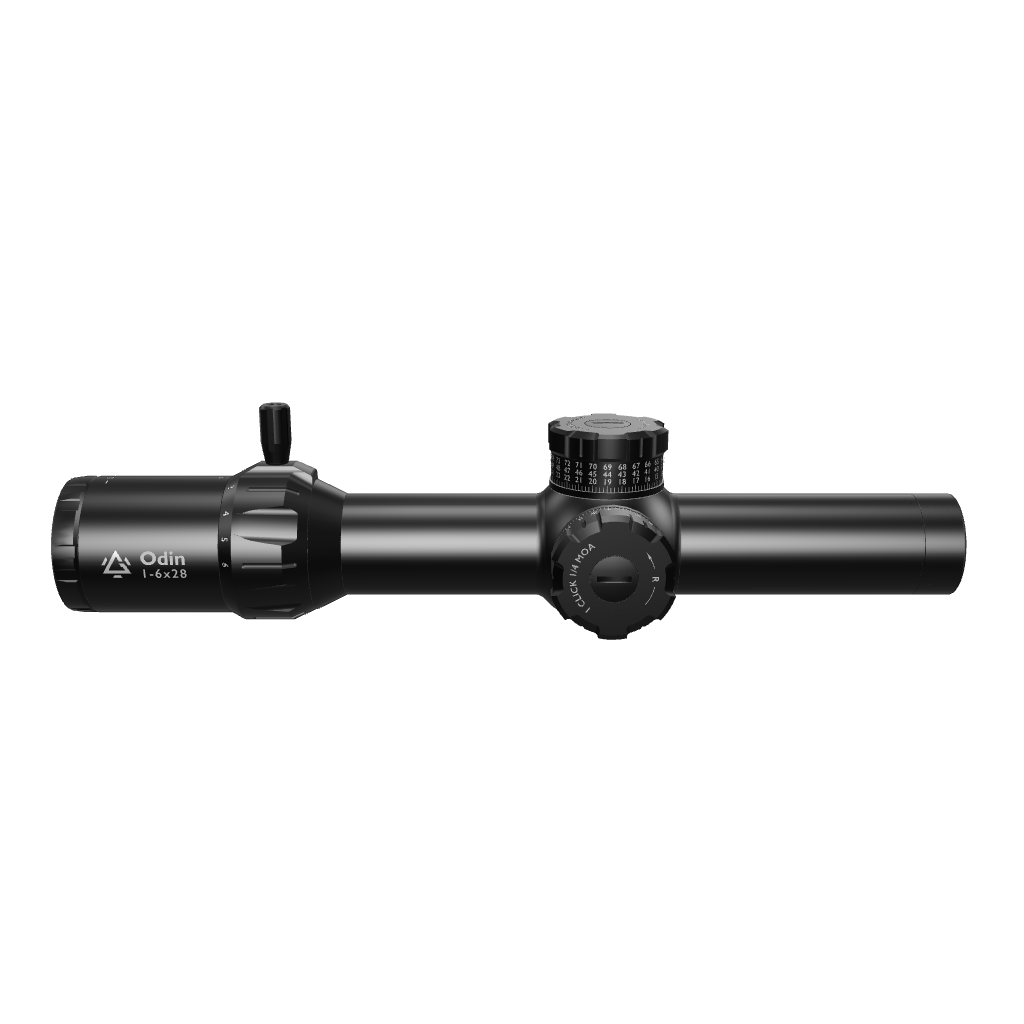

Best 1-10x LPVO Rifle Scopes: 2026 Tested & Reviewed

There was a time when choosing a rifle optic meant picking a side. You either opted for the blindingly fast, target-to-target transitions of a red dot, or you locked yourself into the heavy, high-magnification glass built for distance. Then came the Low Power Variable Optic (LPVO).
Today, the 1-10x LPVO is the undisputed king of do-it-all versatility. It promises a true, distortion-free 1x sight picture for close-quarters shooting, alongside a massive 10x zoom capable of punching out past 600 yards. It is the closest thing the firearms world has to a "cheat code" for an all-purpose rifle.
But packing a 10x magnification range into a compact tactical scope is an incredible feat of optical engineering—and not every manufacturer sticks the landing. At maximum zoom, many cheap scopes suffer from a razor-thin eye box, blurry edges, and dark sight pictures.
You don't want to find out your optic compromises right when you need it most. Whether you are building a duty rifle, setting up a competition rig, or looking for the ultimate ranch gun setup, we’ve tested the glass, dialed the turrets, and abused the housings to bring you the absolute best 1-10x LPVOs on the market today.
How to Choose a 1-10x LPVO: Everything Beginners Need to Know
Choosing a 1-10x Low Power Variable Optic (LPVO) is one of the best upgrades you can make for a versatile rifle. Because they dial all the way down to a true 1x (no magnification) and zoom out to a massive 10x, they can replace both a red dot for close quarters and a high-power scope for long-range targets.
However, cramming a 10x zoom range into a compact rifle scope requires some major engineering tradeoffs. For a beginner, looking at the spec sheet can feel like reading a foreign language.
1. First Focal Plane (FFP) vs. Second Focal Plane (SFP)
This is the most critical choice you will make, as it changes how the reticle behaves.
-
First Focal Plane (FFP): The reticle grows and shrinks as you change magnification. At 1x, it looks small (like a red dot). At 10x, it magnifies so you can clearly see hash marks for bullet drop and windage. Holdovers are accurate at every zoom level.
-
Second Focal Plane (SFP): The reticle stays the exact same size no matter how much you zoom. This keeps the reticle big and easy to see at 1x, but the drop-compensation hash marks are only accurate at maximum magnification (10x).
Beginner Recommendation: For a 1-10x scope, FFP is highly recommended. Managing a 10-digit math problem on an SFP scope when you're zoomed in at 5x or 7x is incredibly frustrating in the field.
How to Find the Best LPVO Reticle
FFP vs. SFP LPVO: The Core Differences
2. Tube Size and Objective Lens (Light & Eye Box)
Most standard rifle scopes use a 30mm main tube, but many high-end 1-10x LPVOs jump to a 34mm tube, often paired with a larger 26mm or 28mm objective lens (the front glass).
Why does this matter?
-
The Eye Box: As you zoom into 10x, the "eye box" (the window behind the scope where your eye can actually see the image clearly) shrinks drastically.
-
Exit Pupil: A larger 34mm tube and a 28mm objective lens allow more light into the scope. This creates a larger "exit pupil," giving you a much more forgiving, less finicky view through the glass at high magnification.
3. Reticle Choice: MOA vs. MIL vs. BDC
Don't let the alphabet soup scare you. The reticle is just the grid or crosshair pattern inside the glass.
-
BDC (Bullet Drop Compensator): Pre-calculated crosshairs for specific calibers (like 5.56/.223 or 7.62/.308). Easiest for beginners—you just line up the "3" mark for a 300-yard shot.
-
MOA / MIL: These are universal grid systems (like inches vs. centimeters). They require a tiny bit of learning but are much better if you change ammo weights or shoot different calibers, because you can map your exact bullet trajectory to the hash marks.
4. Glass Quality and Coatings
At 1x magnification, cheap glass looks fine. But when you crank that dial up to 10x, cheap glass will look dark, blurry around the edges, and exhibit chromatic aberration (strange purple or yellow color fringing around targets).
Look for scopes listing ED (Extra-Low Dispersion) glass or HD glass, preferably from trusted regions like Germany (such as SCHOTT glass) or Japan. Fully multi-coated lenses are a must to eliminate blinding glare when shooting facing the sun.
5. The "Must-Have" Mechanical Features
When shopping, check the feature list for these two tactical essentials:
-
Locking Turrets: Keeps your windage (left/right) and elevation (up/down) dials from accidentally spinning when your rifle rubs against gear, straps, or brush.
-
Zero-Stop: After you dial your turrets up for a 500-yard shot, a zero-stop mechanically blocks the turret from spinning down past your original baseline zero (usually 100 yards). It lets you return to "home base" instantly without looking.
Checklist for Beginners
|
Look For |
Why it Matters |
|
FFP Configuration |
Ensures your long-range drop marks are always accurate. |
|
34mm Tube / Large Lens |
Brightens the image and prevents a tiny, frustrating eye box at 10x. |
|
ED/HD Glass |
Keeps the target crisp and free of blur at high magnification. |
|
Illuminated Reticle |
Acts like a fast red dot sight when dialed down to 1x. |
Tired of Restrictive 1-10x Eyeboxes? The Gunnr Odin ED Changes Everything
Choosing a 1-10x Low Power Variable Optic (LPVO) stems from a desire for the ultimate "do-it-all" rifle setup. In theory, you get the lightning-fast, both-eyes-open speed of a red dot at 1x, combined with the capability to identify and engage targets at 600+ yards at 10x.
However, crowding a massive 10x zoom ratio into a compact tactical scope forces immense engineering tradeoffs. Most 1-10x scopes on the market leave shooters dealing with three incredibly frustrating issues:
-
The "Soda Straw" 10x Eye Box: At maximum magnification, the viewing window shrinks drastically. If your cheek weld isn't pixel-perfect, the image completely blacks out.
-
High-Magnification Blur & Rainbow Edges: Cheap glass completely falls apart at 10x, leaving you with blurry target edges and distracting chromatic aberration (purple/yellow color fringing).
-
Complex Math Under Pressure: Second Focal Plane (SFP) configurations keep the reticle prominent at 1x, but render your ballistic holdovers completely useless at anything other than max magnification.
The Solution: Gunnr Odin ED 1-10×28 FFP Rifle Scope

Odin ED 1-10×28 FFP LPVO Rifle Scope
GRX-2B MOA Reticle | 34mm Tube | German SCHOTT ED Glass
The Gunnr Odin ED 1-10×28 was engineered from the ground up to eliminate these compromises. By upgrading the physical chassis and deploying elite German glass, the Odin transforms paper specifications into real-world tactical dominance.
1: Dim, Restrictive Sight Picture at 10x?
-
The Odin Fix【34mm Tube + Over-Sized 28mm Objective Lens】
Most standard LPVOs utilize a restrictive 30mm tube paired with a 24mm objective lens. The Gunnr Odin blows this wide open by stepping up to a 34mm main tube and an oversized 28mm front objective. This expands the exit pupil, flooding your eye with light and providing a vastly more forgiving eye box at 10x. You acquire your target instantly, even when mounting the rifle from awkward, non-standard shooting positions.
2: Hazy Targets and Edge Distortion at Distance?
-
The Odin Fix【German SCHOTT ED Glass + Fully Multi-Coated Lenses】
Say goodbye to the milky, washed-out resolution typical of budget optics. The Odin uses premium German SCHOTT Extra-Low Dispersion (ED) glass. It aligns light wavelengths flawlessly to eradicate color bleeding and edge distortion. Coated with premium anti-reflective layers, it guarantees a razor-sharp, high-contrast sight picture whether you are dealing with blinding midday glare or shooting into the shadows of dusk.
3: Recalculating Holdovers When Changing Magnification?
-
The Odin Fix【First Focal Plane (FFP) + GRX-2B MOA Tree Reticle】
With the Odin's First Focal Plane design, the reticle scales dynamically alongside your zoom level.
At 1x: The reticle contracts into a clean, daylight-bright center dot for rapid close-quarters indexing—working just like a dedicated red dot.
At 10x: The GRX-2B Tree Reticle expands fully, revealing highly precise 1 MOA grid hash marks. Your windage and elevation holdovers remain 100% accurate at every intermediate magnification.
4: Accidental Turret Bumps and Losing Your Baseline?
-
The Odin Fix【Locking Turrets + Mechanical Zero-Stop】
Dynamic movement through thick brush or tight tactical stages can easily knock exposed turrets out of alignment. The Odin features heavy-duty tactical locking turrets that only adjust when purposefully lifted. Once you've dialed up for a long-distance target, the mechanical Zero-Stop allows you to instantly spin the elevation knob back down to a hard physical stop at your exact baseline zero—no looking down, no counting clicks, 100% blind operation.
5: Scopes Losing Zero From Heavy Recoil or Weather Failure?
-
The Odin Fix【7075 Aluminum + 1000G Shockproofing + IP67 Sealing】
Gear failure when it matters most is unacceptable. Machined from high-tensile 7075 Aluminum Alloy, the Odin is rated to withstand a brutal 1,000 impacts at 1,000G and has been verified across 2,000 live-fire rounds to handle heavy recoiling platforms. It is completely IP67 dustproof/waterproof and rated to run flawlessly from a freezing -59°F up to a scorching 149°F.
Gunnr Odin ED Technical Specifications
|
The Pain Point |
The Gunnr Odin Solution |
Technical Spec |
|
Tight eye box & dim 10x vision |
Massive light transmission & wider exit pupil |
34mm Tube / 28mm Objective |
|
Blurry target edges & color fringing |
Distortion-free, razor-sharp resolution |
German SCHOTT ED Glass |
|
Inaccurate holdovers at different zooms |
Consistent subtensions across all zoom ranges |
First Focal Plane (FFP) |
|
Accidental turret shift & losing home base |
Lift-to-unlock adjustments with hard stop return |
Locking Turrets & Zero-Stop |
|
Internal fogging & shifting zero from recoil |
Overbuilt, battle-tested harsh weather housing |
7075 Aluminum / IP67 Rated |
Final Thoughts
At the end of the day, picking the "best" 1-10x LPVO isn't about finding the most expensive piece of glass on the shelf—it’s about matching the tool to your specific mission.
What about you? Are you leaning toward the crisp precision of an FFP tree reticle, or do you prefer the simplicity of a BDC shooter? Let us know your thoughts in the comments below, and don't forget to subscribe to our newsletter for more deep-dive optic breakdowns and gear reviews!
FAQ
What LPVO do Navy SEALs use?
Navy SEALs and other tier-one operators under US Special Operations Command (SOCOM) primarily use the Nightforce ATACR 1-8x24mm F1, designated as the SU-294/PVS.
While SEALs historically relied heavily on holographic sights paired with magnifiers (like the EOTech EXPS3), the mission dictated a shift toward low-power variable optics for mid-range capability.
Under the Miniature Aiming System - Day Optic (MAS-D) program, the Nightforce ATACR became the premier variable glass of choice due to its indestructible build quality and ED glass clarity.
What LPVO does the US military use?
The most widely adopted LPVO across the United States military is the SIG Sauer TANGO6T 1-6x24mm. It was selected by the US Army for the Direct View Optic (DVO) program to replace the aging Trijicon ACOG on M4A1 carbines, and it also serves as the Squad Designated Marksman Rifle (SDMR) optic.
The US military favors a 1-6x magnification range over higher zooms because it strikes the perfect balance of low-weight, battlefield durability, and sufficient magnification to accurately identify and engage human-sized targets out to 600 meters.
What are the disadvantages of LPVO?
While Low Power Variable Optics (LPVOs) provide unmatched versatility, they demand significant trade-offs in weight, eye box forgiveness, and battery life.
An LPVO system easily adds 22 to 30 ounces to your rifle once paired with a sturdy mount, which is nearly double the weight of a standard red dot or prism setup.
Furthermore, while the view is incredibly forgiving at 1x, dialing the magnification up to 6x, 8x, or 10x shrinks the exit pupil down to a tiny window, resulting in a unforgiving "eye box" where the slightest head movement blacks out the sight picture.
Finally, unlike red dots that can run for 50,000 hours on a single battery, the illumination in an LPVO eats through batteries in just 30 to 100 hours, leaving you with a tiny, hard-to-read etched reticle at 1x if the electronics die under pressure.
Which LPVO magnification is best?
The best LPVO magnification depends entirely on your target distance, as stretching the zoom ratio forces an immediate compromise in glass physics and user comfort.
A 1-6x LPVO is the reigning champion for standard 5.56 carbines and general-purpose shooting out to 400 yards, offering the most forgiving eye box, lightest weight, and flattest 1x view for fast, close-quarters transitions.
Stepping up to a 1-8x LPVO serves as the optimal "sweet spot" for multi-use or hunting rifles, granting cleaner target identification at 500 to 600 yards without adding excessive bulk.
Meanwhile, a 1-10x LPVO represents the ultimate maximum-versatility tool for advanced marksmen stretching out to 800 yards, though it demands top-tier (and expensive) glass to prevent a dark sight picture and a brutally tight, unforgiving eye box at maximum zoom.