
LPVO vs. HPVO Comparison Guide for Shooters

When you step into the world of gun scopes, the terms can be a bit confusing. Learning the differences between LPVOs and HPVOs will help you make the right purchase, ensure that you end up with an optic that performs exactly as you need it to. Also, recognizing these distinctions serves as a guide during training sessions, competitions, and general practice.
So, what are the major differences between an LPVO and an HPVO? Which is best suited for what purposes?

What Is an LPVO? Key Features and Best Uses
A low-power variable optic (LPVO) is designed for a lower magnification range, typically starting from around 1x up to around 8x or 10x magnification.
The advantage of an LPVO is that it provides 1x at the lower end of its magnification range, which is extremely useful in close quarters, and a decent mid-range magnification. This versatility, ease of use, and rapid target engagement make this optic an excellent choice for fast-paced shooting scenarios.
Key Features of An LPVO
- Wide Field of view: The low 1x magnification range helps in maintaining a broad view of the surrounding area, which is ideal during fast action, close combat, or hunting in environments with moving targets.
- Lightweight and compact design: These optics tend to be more compact and lighter, contributing to easier handling and reduced fatigue during extended use.
- Quick target acquisition: Since the optic is not zoomed in too far, you can snap onto a target more quickly, which is essential for self-defense or fast-paced competitive shooting.
- Versatile performance: Even though LPVOs are geared toward lower magnification, many modern models offer adjustments that allow for effective performance in varied lighting conditions and distances.
Best Uses of an LPVO
- Close and medium range shooting: When you primarily engage targets at closer distances, such as in competitive shooting or urban self-defense scenarios, an LPVO optic is an excellent choice.
- Hunting in thick environments: In wooded areas or environments where movement is constant and quick target identification is necessary, the wide field of view of an LPVO is a definite advantage.
- Tactical situations: Law enforcement or military personnel often prefer a low-power setup for dynamic engagements, as LPVO optics allow them to quickly adapt to shifting situations.
To sum up, a low-power variable optic is often chosen for its versatility and ease of use in fast-moving or close-quarter scenarios. Its design favors speed and comfort over extreme detail at long range.
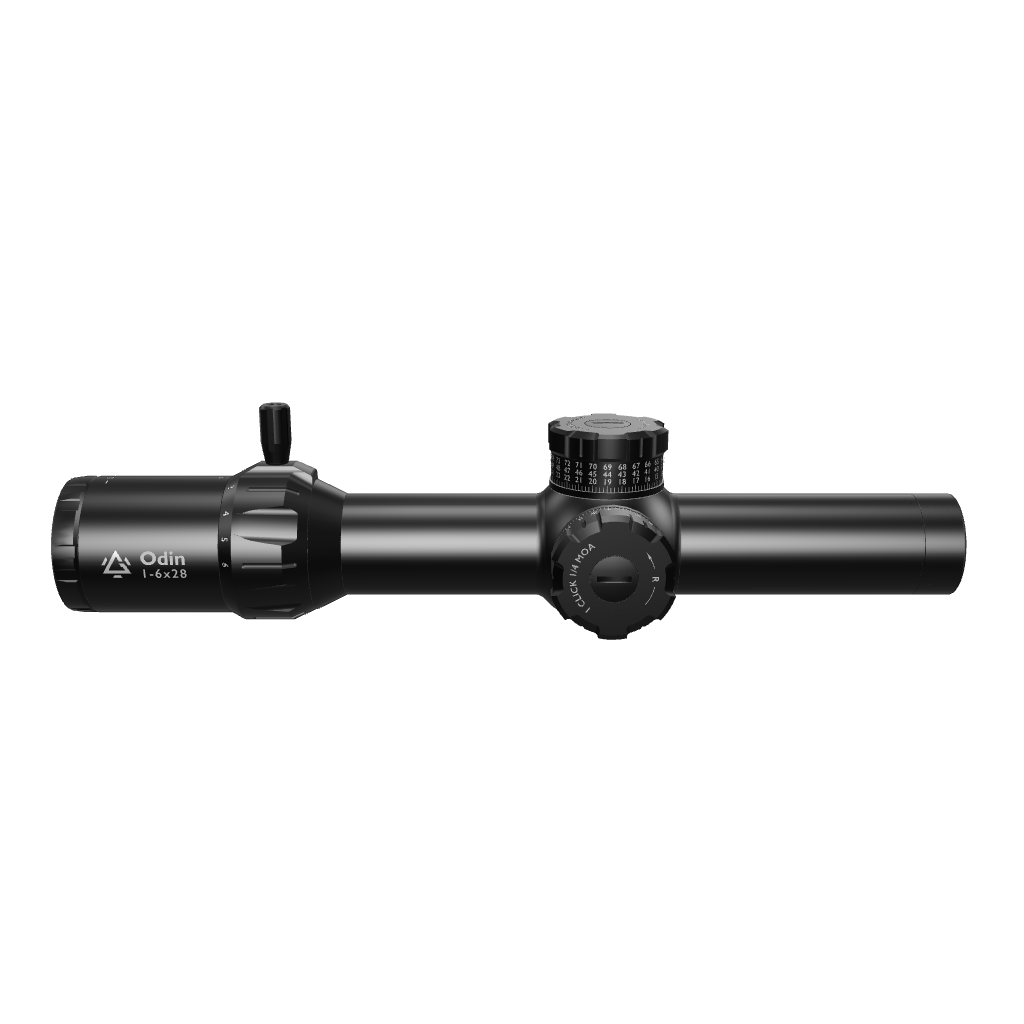
Gunnr LPVOs: High Quality LPVOs You Can Afford
When you're ready to elevate your shooting precision, Gunnr Odins LPVOs offer you the perfect blend of innovation and reliability at a price that won't break the bank. Experience the superior clarity of German Schott ED Glass, ensuring exceptional edge-to-edge sharpness for every shot.
- The first focal plane (FFP) reticles provide fast, accurate distance estimation at any magnification, adapting seamlessly to changing light conditions with six brightness settings.
- Constructed from durable 7075 aluminum alloy, these scopes are IP67-rated for dust and waterproof performance, guaranteeing dependability in any environment.
With the Gunnr Odin, you're equipped with a versatile tool designed to enhance your shooting experience and leave you wondering how you ever aimed without it.

What Is an HPVO? Key Features and Best Use Cases
An HPVO (High-Power Variable Optic), on the other hand, is designed for higher magnification ranges, often starting beyond 6x up to 20x or more. This type of optic excels at bringing distant targets into clear focus by providing a more detailed view, which is helpful in long-range shooting situations.
Key Features of an HPVO
- Superior detail at long range: The increased magnification allows shooters to observe fine details in distant targets. This is particularly crucial for precision shooting in competitive sports or long-range hunting.
- Enhanced target discrimination: With a higher magnification, it is easier to differentiate between a target and its background. This leads to more accurate targeting, especially over extended distances.
- Fine-tuned adjustability: Many high-power scopes offer advanced adjustment mechanisms for windage, elevation, and parallax. These adjustments allow for fine-tuning accuracy when engaging distant targets, ensuring that every shot is as precise as possible.
Best uses of an HPVO
- Long-Range Shooting Competitions: When every fraction of a second and every tiny detail matter, a high-power optic provides the necessary detail to make accurate shots at extended distances.
- Long-Range Hunting: For hunters who engage targets that are far away, this optic can make the difference between a clear shot and a missed opportunity.
- Sniper and Tactical Precision Tasks: In scenarios that require meticulous precision, such as in tactical and sniper roles, the ability to adjust for minor discrepancies is crucial for the success of the mission.
In essence, a high-power variable optic shines when the emphasis is on precision and detail at long distances. It is best suited for users who are prepared to spend time adjusting their settings to achieve the perfect shot.
LPVO vs HPVO: Key Differences
| Feature | Low-Power Variable Optic | High-Power Variable Optic |
| Magnification Range | Typically up to 4x to 6x | Typically 6x to 20x or more |
| Field of View | Wider field of view | Narrower, more focused view |
| Weight and Compactness | Lighter and compact | Generally heavier and bulkier |
| Ease of Target Acquisition | Faster at close quarters | Slower due to higher magnification |
| Precision at Distance | Less detailed at long ranges | Exceptional detail for long-range shots |
| Use Case Focus | Tactical, self-defense, up-close action | Competitive long-range shooting, hunting |
Who Should Choose an LPVO Over an HPVO?
If your shooting activities emphasize speed and a broad perspective, a low-power variable optic is likely the best fit. Here are some scenarios and shooter profiles that would benefit the most:
1. Close to Medium Range Shooters
If your shooting practice or engagement usually occurs at ranges where targets are close to mid-distance, a low-power optic will serve you better. This distance falls within the ideal LPVO range, and the broader field of view ensures that you can keep track of fast-moving targets without the hassle of frequently adjusting your focus.
2. Self-Defense and Tactical Shooters
For individuals involved in law enforcement or who are preparing for self-defense, the importance of quickly spotting and engaging a target cannot be overstated. Low-power optics reduce the time it takes to acquire a target and improve situational awareness in dynamic environments.
3. Beginners and Casual Shooters
If you are just starting or are a casual shooter, the learning curve for a low-power variable optic is typically less steep. The simpler setup and easier adjustments make it a friendly option for those who may not want to invest a lot of time in fine-tuning their equipment.
4. Hunters in Dense Environments
In thick woods or brush, a wide field of view is crucial. A low-power optic allows you to spot game quickly without the need to fidget with settings, making your hunting experience smoother and more natural.
Choosing a low-power variable optic offers unmatched ease of use, especially when rapid target transition and quick acquisition are necessary. This optic is often the go-to option for scenarios where the speed of engagement and ease of use are paramount.
 Who Should Choose an HPVO Over LPVO?
For those whose shooting activities revolve around long-distance engagements and require minute details, a high-power variable optic stands out as the superior choice. This type of optic is best suited for:
1. Long-Range Competitors and Precision Shooters
If you participate in long-range shooting competitions or precision shooting sports, the extra magnification and fine-tuning capabilities of a high-power optic are indispensable. It enables you to see and adjust for tiny variables that can make a significant difference in accuracy.
2. Long-Range Hunters
For hunters who venture into open terrains where game may appear at vast distances, the ability to zoom in and capture fine details can be a game-changer. A high-power optic allows you to make accurate shots even when the target is far away.
3. Tactical and Sniper Professionals
In tactical operations where engaging targets at long distances is common, the detailed view provided by high-power optics ensures that every shot is as precise as possible. The advanced adjustment features found in high-power models further enhance accuracy under critical conditions.
4. Experienced Shooters and Enthusiasts
For those who have honed their shooting skills and appreciate the nuances of long-range engagements, a high-power optic provides the tools necessary to reach peak performance. The detailed view it offers allows experienced shooters to perfect their shot placement repeatedly.
Gunnr Heimdall HPVOs: Perfect for Advanced marksmen
For long-range shooters, an HPVO like the HEIMDALL 6-24x50 HPVO Rifle Scope, with magnification 6-24x, German Schott glass optics, and a shooting distance of over 1,000 yards, is perfect for:
- Hitting steel targets at 1,000+ yards
- Zeroing rifles with tight shot groups
- Training for PRS competitions
- Improving their understanding of external ballistics
Final Thoughts on LPVOs vs HPVOs
In summary, both low-power and high-power variable optics have unique strengths that cater to different needs.
The low-power variant is perfect for fast-paced, dynamic environments where a wide field of view and rapid target acquisition are crucial. It offers a lightweight design and ease of use, making it an ideal choice for beginners, self-defense situations, and close- to mid-range engagements.
Conversely, the high-power variable optic delivers unparalleled detail and precision over long distances. It is a top choice for competitions, precision hunting, and tactical operations where every tiny adjustment matters.
Your decision should ultimately rest on your specific shooting style, environmental considerations, and overall comfort with the optics. For more context, you might want to explore LPVO vs. MPVOs vs HPVOs.