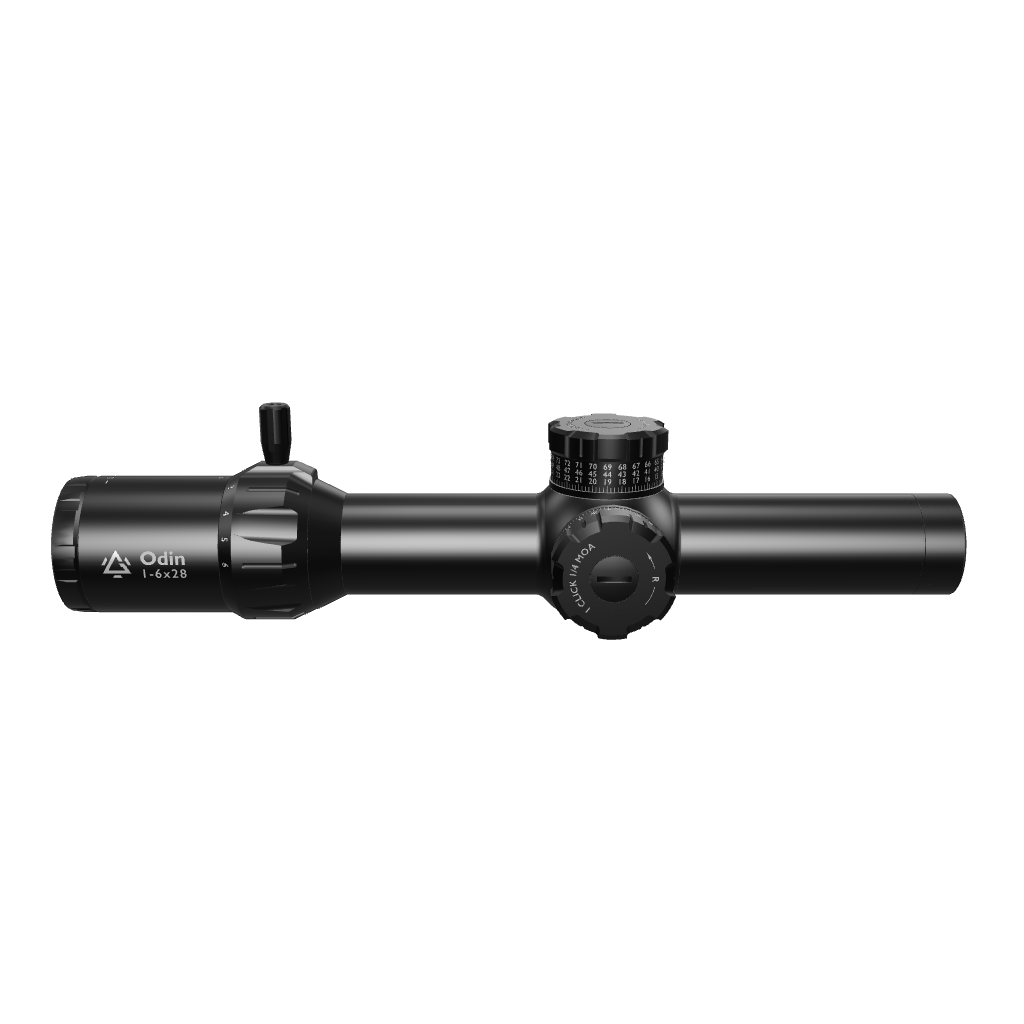

LPVO With Offset Red Dot Sights: Pros and Cons

Ever thought about running an LPVO with an Offset Red Dot? Truth is, it is not a horrible idea, and it actually has its uses. But many shooters wonder whether the red dot actually adds real value or just more bulk. Whatever the case may be, this combo pairs a magnified optic with a compact red dot mounted at an angle.
In this article, we break down when an LPVO with an offset red dot is useful, when it’s overkill, and how to choose wisely.
Understanding the LPVO and Red Dot Combo
An LPVO with an Offset Red Dot is a setup that combines a low-power variable optic (LPVO) with a red dot for the purpose of blending a multi-range platform. Think 1-6x, 1-8x, or similar, only with a small red dot sight mounted to the side, usually at a 30 or 45-degree angle.
The main point of this rather gimmicky setup is that it lets you shoot through your LPVO for magnified shots, and with the added perk to maneuver the rifle to the red dot sight for fast, close targets.
This setup comes up in both competition settings and real-world applications. On tactical-gear forums, some shooters recommend it because it gives a fast close-range optic while preserving magnification for longer shots.

When Is a Red Dot on an LPVO an Upgrade?
People who use this setup will argue that, while the LPVO is versatile, having a dedicated dot makes transitions faster in scenarios where an LPVO for close-quarter combat is necessary.
The question, however, is: Is it really necessary? Considering that an LPVO is already capable at 1x, do you really need the red dot?
Here are scenarios where adding an offset red dot to your LPVO can be a smart upgrade:
- Close-quarter combat speed: Even though LPVOs can operate at 1x, many shooters find the red dot offers faster target acquisition under stress. You can roll the rifle and pick up the dot instantly rather than dialing magnification.
- No need for backup: The offset red dot provides a backup optic. If your LPVO fails, the battery dies, or the optic gets knocked, you still have a working sight system.
- Variable engagements: In competition or field use, you may need both close-quarters speed and mid-range precision. The LPVO handles longer targets while the red dot handles close ones.
- Unusual shooting positions: When leaning around corners or shooting from awkward barricades, rolling to a side-mounted red dot can be more practical than trying to re-zero or change your magnification.
- Zeroing at various ranges: Some shooters zero the LPVO for, say, 100 or 200 yards, and separately zero the red dot for much closer distances like 25–50 yards.

When You Don’t Really Need a Red Dot on an LPVO
Having both an LPVO and an offset red dot sight could prove very useful in some short- to long-range scenarios. However, not every setup warrants adding an offset red dot.
Here are times when you might skip it:
- You generally shoot for 100 yards: If your primary use is close-range targets, your LPVO at 1x may already serve you well, so there’s no need to overcomplicate things.
- Weight or bulk could be a major hindrance: An extra optic means more weight, more height, and possibly worse balance. Some shooters feel the trade-off isn’t worth it.
- Training burden: Using an offset red dot requires training to roll the rifle smoothly. If you don’t need to transition quickly, you might be better off mastering the LPVO.
- Minimal gear is generally best: If you prefer a low-profile build and don’t want more hardware hanging off your rifle, a well-mounted LPVO without additional gear is more than enough.
- Redundant functionality: For others, using both is redundant. The LPVO gives 1x capability, and the red dot overlaps too much in function without enough benefit, so many shooters wouldn’t see the point in carrying both.

Factors to Consider Before Deciding to Buy an Offset Red Dot on LPVOs
If you're on the fence about buying an offset red dot sight for your LPVO build, think about these important factors:
- Mount angle and placement: Decide whether to use a 30 or 45 degree offset mount because the 30 degree is closer to your line of sight, but may interfere with large magnification turrets. 45 gives more clearance, but can change how quickly you grab the dot. Some shooters mount the red dot forward or behind the LPVO, depending on rail space and comfort.
- Zeroing strategy: You'll likely want to zero your LPVO and your offset differently. A common approach would be to zero your LPVO at medium range (100-200 yards), while zeroing the red dot much closer at 25-50 yards.
- Weight and balance: Adding a red dot adds weight, and that’s why you may need a bit more practice to get used to the weight. Consider whether your rifle stays balanced with the extra optic and how it affects your handling over time.
- Battery management: More electronics mean more batteries to maintain. If reliability is key, make sure your red dot has a long battery life.
- Usage profile: Think about how you use your rifle. If you run in mixed-distance training, a combo may help. If you’re a hunter or you mostly work mid-range, maybe skip the dot.
- Budget: Beyond the extra cost of the optic, you need a reliable mount. Good mounts are critical for maintaining a perfect zero, but they’re also expensive.

How to Decide if It’s Right for You
Here’s a simple list of questions for you to consider before figuring out if an LPVO with Offset Red Dot is worth it for your platform:
- List all use cases: Are you shooting in competition, doing duty work, home defense, or hunting? Whatever the case may be, always remember to jot down all possible application scenarios.
- Mark your distances: Do you need very fast close shots with magnified precision, or do you prefer to just stick to close-range shooting?
- Consider the space on your rail: Do you have enough room for an offset red dot mount that won’t interfere?
- Train and practice: Are you willing to practice rolling the rifle to the dot, or will you mostly stick to your standard LPVO?
- Assess your budget: While you can find your budget options for LPVOs, you need to add up the cost of the LPVO, dot, mount, and any extra parts.
- Try before you commit: If possible, borrow or rent a similar setup, or use transition drills like the LPVO to red dot drill to test how effective a certain setup is for you.

Final Thoughts on Offset Red Dots with LPVO
Running an LPVO with an offset red dot sight can add real tactical and practical value and get you some solid results.
With an LPVO with red dots, you get fast transitions, redundancy, and flexibility across engagement distances, but it also brings added weight, cost, and the need for training.
If your shooting style justifies both optics, the combo can be powerful. If not, your LPVO at 1x may already cover most scenarios well enough. Pick carefully and base your opinion on how, where, and how much you shoot.
You might be interested in our guide on choosing the best LPVO for 300 Blackout.