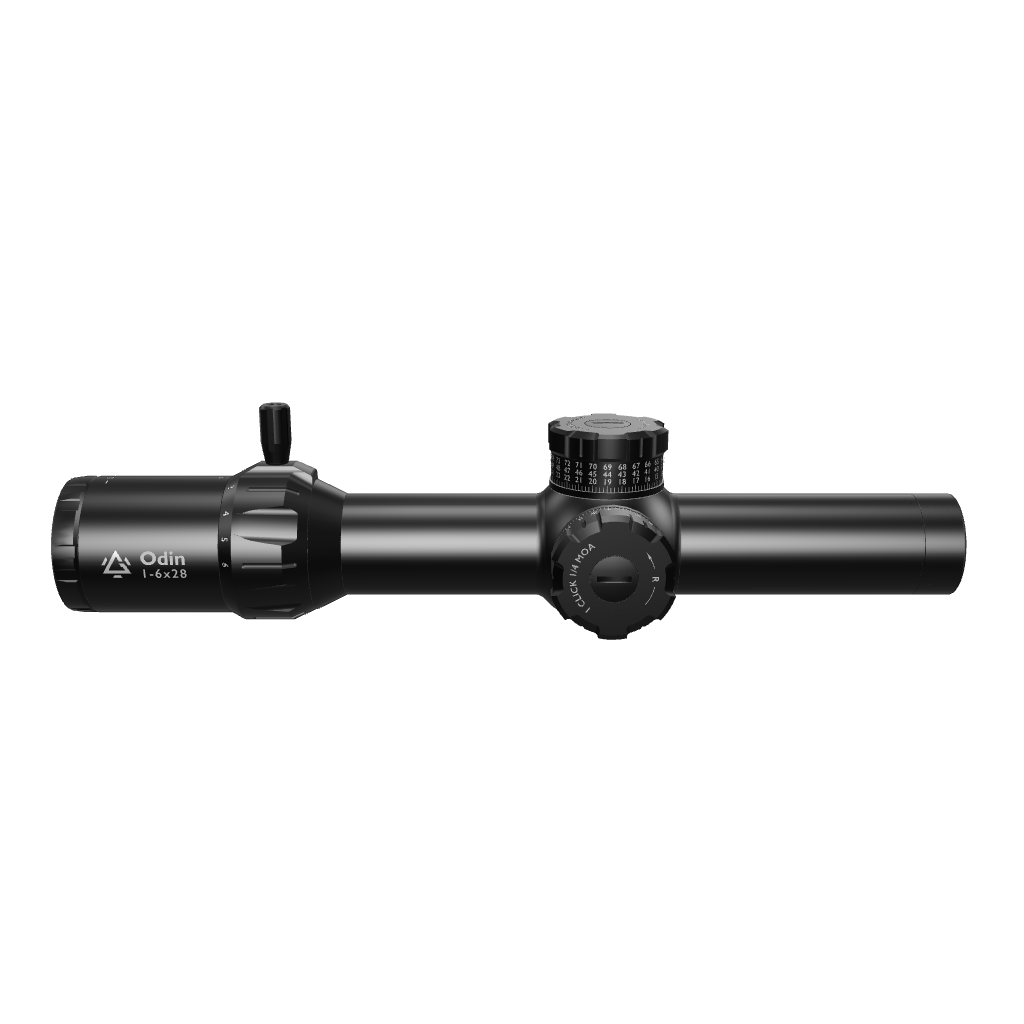

What Do the Numbers on Rifle Scopes Mean? Complete Beginner’s Guide

Rifle scopes often come with a series of numbers—like 3–9×40 or 4–16×50—that can seem confusing at first glance, especially for beginners. However, these numbers are essential for understanding how a scope performs in different shooting situations. They indicate key features such as magnification range, objective lens size, adjustment precision, and overall usability. By learning what these numbers mean, shooters can better match a scope to their specific needs, whether it’s hunting, target shooting, or long-range precision.
Zoom Ratio: Magnification

When you look at a rifle scope labeled something like 6-24×40, the first set of numbers (6-24×) refers to the zoom ratio, also known as magnification range. The numbers on a rifle scope that indicate the zoom ratio, such as 6–24×, represent the range of magnification the scope offers.
The first number (6×) is the lowest magnification, meaning the target appears three times closer than with the naked eye, providing a wider field of view that is ideal for close-range shooting and tracking moving targets.
The second number (24×) is the highest magnification, making the target appear nine times closer and allowing for greater detail and precision at longer distances.
This adjustable zoom range lets shooters adapt to different situations, balancing speed and awareness at lower magnification with accuracy and detail at higher magnification, making the scope more versatile across various shooting conditions.
Fixed vs. Variable Magnification
Fixed vs. Variable Magnification refers to whether a rifle scope has a single, constant magnification or an adjustable zoom range.
A fixed magnification scope (e.g., 4× or 6×) stays at one power level, offering a simpler design that is often more durable, lightweight, and reliable, with consistent image clarity and no need for adjustments in the field—making it a good choice for shooters who operate within a consistent distance range.
In contrast, a variable magnification scope (e.g., 3–9× or 4–16×) allows you to adjust the zoom depending on the situation, providing a wider field of view at lower magnification for close-range or moving targets, and greater detail at higher magnification for long-range precision.
While variable scopes are more versatile, they are typically more complex, slightly heavier, and may require more adjustment, but they are ideal for shooters who need flexibility across different distances and environments.
Objective Lens

The objective lens diameter is the last number in a rifle scope specification, such as the “40” in 3–9×40, and it refers to the size of the front lens measured in millimeters. This lens plays a key role in how much light the scope can gather.
A larger objective lens (e.g., 50mm) allows more light to enter, resulting in a brighter and clearer image—especially useful in low-light conditions like dawn or dusk. However, bigger lenses also make the scope heavier and may require higher mounting on the rifle.
Smaller objective lenses (e.g., 32mm or 40mm) are more compact and lightweight, making them ideal for general use and easier handling, though they may not perform as well in dim lighting. Overall, the objective lens diameter affects image brightness, clarity, and the scope’s size and practicality.
Elevation, Windage, and Parallax Adjustments

The numbers related to elevation, windage, and parallax adjustments on a rifle scope indicate how precisely you can adjust your aim to match real-world conditions.
Elevation and windage are typically measured in units like MOA (Minute of Angle) or MRAD (milliradians), and the numbers on the adjustment turrets show how much the point of impact will shift with each click—for example, ¼ MOA per click means each adjustment moves the bullet impact about 0.25 inches at 100 yards. Elevation controls vertical movement (up and down), while windage adjusts horizontal movement (left and right), allowing you to compensate for distance, gravity, and wind.
Parallax adjustment, often marked with distance numbers such as 50, 100, 200, or infinity, helps ensure that the reticle and target are on the same focal plane, reducing aiming error. By setting the parallax to match your shooting distance, you get a clearer image and improved accuracy, especially at longer ranges.
Reticle

The reticle (the crosshair or aiming pattern inside the scope) may include numbers that help you estimate distance, adjust for bullet drop, and compensate for wind. These numbers are typically part of advanced reticle designs such as BDC (Bullet Drop Compensation) or mil-dot reticles.
For example, in a mil-dot reticle, the evenly spaced dots or markings represent specific angular measurements (usually 1 milliradian apart), allowing you to calculate range or hold over without adjusting the turrets.
In BDC reticles, the numbers often correspond to preset distances (like 100, 200, 300 yards), helping you aim accurately at different ranges by using the appropriate mark. Overall, the numbers on a reticle act as reference points, enabling quicker and more precise shooting adjustments directly through the scope.
How to read a scope reticle
Reading a scope reticle means understanding how the markings inside your scope help you aim accurately at different distances and conditions.
The center crosshair is your primary aiming point, but additional markings—such as dots, hash marks, or lines—are used for holdover (bullet drop) and wind correction.
In a mil-dot reticle, the spaced dots represent milliradians, allowing you to estimate distance or adjust aim without turning the turrets, while in MOA-based reticles, the hash marks correspond to minute-of-angle increments for precise adjustments.
Some scopes use BDC (Bullet Drop Compensation) reticles, where the lower markings are calibrated for specific distances (like 200, 300, or 400 yards), letting you aim using preset reference points.
To read a reticle effectively, you align the correct mark with your target based on distance, wind, and elevation, rather than always using the center crosshair, which allows for faster and more accurate shooting in real-world conditions.
Eye Relief and Field of View

The numbers related to eye relief and field of view on a rifle scope describe how comfortable and practical the scope is to use.
Eye relief is usually given in inches (e.g., 3.5–4 inches) and indicates the optimal distance your eye should be from the scope lens to see a full, clear image; longer eye relief improves safety by reducing the risk of recoil hitting your eye and also adds comfort during extended use.
Field of view (FOV) is typically measured in feet at 100 yards (e.g., 33–13 ft @ 100 yds) and represents how wide an area you can see through the scope at a given magnification. Lower magnification provides a wider field of view, making it easier to track moving targets and stay aware of your surroundings, while higher magnification narrows the field of view but increases detail for precise aiming.
Together, these numbers help you understand how the scope will feel in use and how well it performs in different shooting scenarios.
Read More: how do rifle scopes work
How to Choose the Right Rifle Scope by Its Numbers?
It ultimately comes down to matching those numeric specifications—like magnification range, objective lens size, and adjustment values—to your specific shooting environment and goals.
For example, hunters often favor a 3–9×40 scope because it offers a practical balance: lower magnification for close-range shots in dense woods and higher magnification for longer shots across open fields, while the 40mm objective lens provides sufficient brightness without adding excessive bulk.
Law enforcement personnel may lean toward a fixed 4×32 scope, as its simplicity, lighter weight, and consistent sight picture allow for faster target acquisition and reliability in high-pressure urban scenarios.
In contrast, military or long-range shooters operating across varied terrain may require a more powerful option like a 6–24×50, where the higher magnification supports precision at extended distances and the larger objective lens enhances visibility in challenging lighting conditions.
For recreational shooters, the decision often focuses on value and ease of use—choosing a scope that balances moderate magnification, manageable weight, and solid durability without unnecessary complexity or cost.
Beyond magnification, understanding numbers related to adjustments (MOA or MRAD), field of view, and eye relief can further refine the choice, ensuring comfort and accuracy. By interpreting what each number represents and aligning it with real-world use—whether hunting, tactical, or target shooting—shooters can confidently narrow their options and invest in a scope that truly fits their needs.
Scope Magnification vs. Distance Chart
|
Scope Magnification |
Best Distance Range |
Typical Use |
|
1× – 2× |
0 – 100 yards |
Close-range, fast target acquisition (home defense, dense woods) |
|
3× – 4× |
100 – 300 yards |
General hunting, short to mid-range shooting |
|
5× – 9× |
200 – 500 yards |
Versatile use, most common for big game hunting |
|
10× – 14× |
300 – 800 yards |
Long-range shooting, open terrain |
|
15× – 24× |
500 – 1,000+ yards |
Precision shooting, target practice, sniping |
|
25×+ |
1,000+ yards |
Extreme long-range, specialized shooting |
Conclusion
The numbers on a rifle scope are not just technical details—they are practical indicators of how the scope will function in real-world conditions. From magnification and lens size to adjustment values and reticle markings, each number plays a role in accuracy, clarity, and versatility. Once you understand how to read these specifications, choosing the right scope becomes much easier, helping you make a smarter investment and improve your overall shooting performance.
FAQ
What does the 3 9x40 mean on a scope?
The numbers 3–9×40 on a rifle scope describe its magnification range and lens size: 3–9× means the scope can zoom from 3 times to 9 times closer than the naked eye, with lower magnification offering a wider field of view for close-range or moving targets and higher magnification providing more detail for long-range accuracy, while 40 refers to the 40mm objective lens, which determines how much light enters the scope and affects image brightness and clarity.
What does 24x50 mean on a scope?
The numbers 24×50 on a rifle scope indicate that it has a fixed 24× magnification and a 50mm objective lens diameter. This means the target appears 24 times closer than with the naked eye, making it well-suited for long-range precision shooting, while the 50mm front lens allows more light to enter the scope, producing a brighter and clearer image—especially useful in low-light conditions—though it may also result in a larger and heavier scope.
Is 4x12 scope better than 3x9?
It depends on your needs: a 4–12× offers higher maximum magnification, making it better for longer-range shooting where extra detail and precision matter, but it has a narrower field of view and is slightly less effective at close range.
In contrast, a 3–9× scope is more versatile, with lower magnification that provides a wider view and faster target acquisition, making it ideal for general use like hunting in mixed environments, so the choice comes down to whether you prioritize long-range performance (4–12×) or all-around flexibility (3–9×).
Is a 40 or 50 mm scope better?
A 40mm scope isn’t necessarily better or worse than a 50mm scope—it depends on how you plan to use it: a 50mm objective lens allows more light to enter, producing a brighter image and better performance in low-light conditions like dawn or dusk, which is ideal for long-range or early/late hunting, but it also makes the scope larger, heavier, and often requires higher mounting; however, a 40mm scope is more compact, lightweight, and easier to handle, offering plenty of brightness for most daytime shooting while maintaining better balance on the rifle, so if you prioritize low-light visibility choose 50mm, but for general use and portability, 40mm is usually the better option.
What size scope do I need to shoot 300 yards?
For shooting at 300 yards, you typically don’t need an extremely powerful scope—something in the 3–9× or 4–12× range is more than sufficient. At this distance, around 6× to 9× magnification is usually ideal, giving you enough detail for accurate shot placement without sacrificing too much field of view or stability.
A scope with a 40mm objective lens works well for most conditions, providing a good balance of brightness and size. Overall, a 3–9×40 scope is one of the most popular and practical choices for 300-yard shooting, offering versatility, clarity, and ease of use without unnecessary bulk or excessive magnification.
How far away can you shoot with a 50mm lens?
A 50mm lens on a rifle scope does not determine how far you can shoot—it only affects how much light enters the scope and how bright your image appears. The “50mm” refers to the objective lens diameter, which helps with clarity, especially in low-light conditions, but shooting distance is mainly determined by magnification (e.g., 3–9×, 6–24×), your rifle, ammunition, and skill level.
Why is a 50mm lens so popular?
A 50mm objective lens is popular on rifle scopes because it offers an excellent balance between brightness and practicality: the larger lens allows more light to enter the scope, producing a brighter, clearer image—especially in low-light conditions like early morning or dusk—without becoming excessively bulky or heavy like even larger lenses.
What does 4-16x50 mean on a scope?
The numbers 4–16×50 on a rifle scope describe its magnification range and lens size: 4–16× means the scope can zoom from 4 times to 16 times closer than the naked eye, with 4× providing a wider field of view for mid-range shooting and 16× offering high magnification for long-range precision, while 50 refers to the 50mm objective lens.