
Red Dot vs LPVO For AR-15

Choosing between a red dot and a Low Power Variable Optic (LPVO) for AR15 rifles is a common debate among modern shooters. Both optics offer unique advantages depending on your specific needs and shooting environment. Understanding how each one functions is the first step toward building the perfect rifle. We hope that this guide will help you decide which system fits your lifestyle and mission best.
LPVO vs Red Dot for AR 15: Key Differences
The differences between an LPVO and a red dot for an AR-15 can be clearly seen in three main areas: magnification, weight/size, and battery life.
1. Magnification Range
The most obvious difference between these two systems is magnification, in which a red dot is a 1x power optic that’s suited for close-quarter combat, but you can’t zoom for long-range shooting.
That being said, an LPVO allows you to zoom from 1x up to 6x or even 10x power, which makes the variable optic much more useful for identifying targets at long distances.
2. Differences in Weight and Size
Weight and size also play a major role in your decision. Red dots are generally very small and lightweight tools, so they do not change the balance of your rifle very much. An LPVO is much larger and adds more weight to your setup. You must decide if the extra weight is worth the high magnification.
3. Battery Life and Reticle Types
Battery life and reticle types are another area where they differ. Most red dots have batteries that last for several years of constant use.
However, an LPVO uses a glass etched reticle that works even if the battery dies, and this provides a level of reliability that many professional shooters appreciate.
LPVO vs Red Dot for AR15: When to Choose an LPVO
There are lots of factors to consider when weighing the pros and cons between LPVOs and red dots, but you should consider an LPVO if you frequently participate in activities like 3-gun competitions or hunting.
Reliability also remains a major factor since batteries can fail at the worst possible time. Additionally, since LPVOs feature a physical reticle etched into the glass, you will always have a point of aim. Here’s why you should choose an LPVO:
 1. Versatility in Cose and Long-Range
Engage targets at close and extended ranges. An LPVO serves as the ultimate tool for shooters who need their rifle to perform at both 10 yards and 400 yards. This optic turns your carbine into a precision instrument with a simple turn of a dial.
2. No Need for Batteries
Etched glass reticles work without battery power. Furthermore, these optics are ideal for shooters with astigmatism because the etched glass reticle stays crisp and clear. This ensures your aiming point never becomes a blurry smear during a critical moment in the field.
3. Suitable for the Visually Impaired
Sharp aiming point for shooters with astigmatism. The ability to dial up magnification allows you to identify specific targets that a simple red dot cannot see clearly.
LPVO vs Red Dot for AR15: When to Choose a Red Dot
A red dot sight is the king of speed for shooters focusing on close-range engagements. You should choose a red dot to keep your rifle as light and maneuverable as possible. Therefore, it is the perfect choice for home defense where you must acquire a sight picture instantly.
 Additionally, red dot sights have unlimited eye relief, allowing you to focus on the threat rather than your specific head position. Consider a red dot if you are working with a strict budget but want professional-grade equipment.
- Speed: Fastest target acquisition for home defense. If your primary goal is shooting within 100 yards, the simplicity of a dot is the most efficient path.
- Lightweight: Keeps overall weight low for easier carry. These sights add very little bulk and maintain a low center of gravity for better handling.
- Best for beginner shooters: Intuitive aiming point from any shooting position. Moreover, they are the right call if you do not want to manage the complexity of magnification dials.
Finally, consider a red dot if you are on a strict budget but still want high quality. You can often get a professional-grade red dot for the same price as an entry-level variable optic. If you only plan to shoot within 100 yards, the extra cost of an LPVO may not be necessary.
LPVO for AR15: Best Uses, Pros, and Cons
An LPVO is essentially a high-performance bridge between short and medium ranges. It is widely used by law enforcement and tactical competitors for its extreme flexibility, and many shooters keep it in high regard as the ultimate general-purpose, jack-of-all-trades optic.
One of the primary uses for this system is target identification. Specifically, the zoom allows you to clearly see a distant threat, like when hunting coyotes, so added information is vital in both defensive and hunting situations.
Pros of an LPVO:
- Provides a clear image at extended ranges up to 500 yards.
- Features an etched reticle that works without battery power.
- Offers adjustable magnification to suit changing environments.
Cons of an LPVO:
- Adds significantly more weight and bulk to your rifle.
- Requires a consistent cheek weld due to limited eye relief.
- High-quality models can be more expensive than standard dots.

Red Dot for AR15: Best Uses, Pros, and Cons
A red dot sight is the champion of speed for close-quarters combat, and it’s the best choice for home defense where shots are taken across a room. Furthermore, its lightweight nature makes it ideal for a trekking rifle as well.
This optic excels in low-light and rapid movement scenarios. You do not need to worry about perfectly aligning your eye with the glass. Therefore, you can get a shot off from behind cover or in awkward positions with ease.
Pros of a Red Dot
- Unlimited eye relief for instant target acquisition.
- Very long battery life that often lasts for years.
- Maintains the light and compact profile of the AR-15.
Cons of a Red Dot
- Lacks magnification for precise shots past 100 yards.
- The dot can appear blurry if you have astigmatism.
- Provides very little data for wind or bullet drop compensation.
Recommended Gunnr LPVOs for AR15
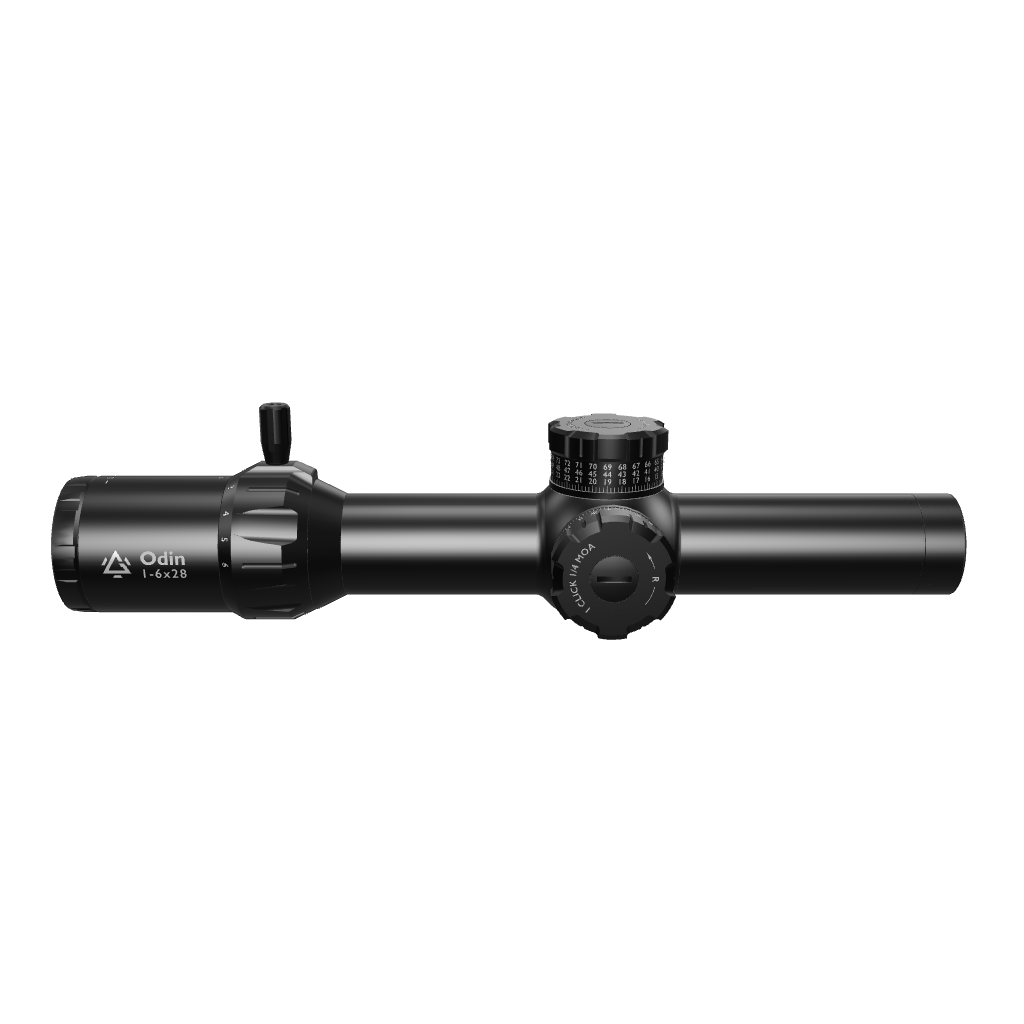
If you have decided that a variable optic is right for you, we have an excellent solution for you. Specifically, the Odin ED 1-6×28 FFP LPVO Rifle Scope is a top-tier choice for those who need a true 1x setting. It offers the speed of a red dot with the power of a 1-6x zoom.
When comparing a red dot sight to a versatile LPVO like the Odin 1-6×28, many shooters find that the LPVO offers more capability without sacrificing usability at close range.
- Modern LPVOs deliver true 1x performance that serves similarly to a red dot, while adding magnification and features that extend your rifle’s usefulness beyond close range.
- Versatility from 1x to 6x - At the lowest power, it functions like a red dot sight for quick target acquisition, then magnifies up for precise shots at extended distances.
- First focal plane reticle - The reticle stays accurate at any magnification, which helps with ranging and holdovers, something a red dot cannot do.
- Superior optical clarity - German Schott ED glass and multi-coated lenses provide a clearer, more detailed view than most reflex sights, especially at medium range.
- Built-in durability - Constructed from 7075 aluminum with IP67 waterproofing, it is rugged and reliable in rough environments.
- Zero stop and locking turrets - These features offer confidence in repeatable adjustments that a red dot cannot match.
For shooters who want both close-range performance and medium-range capability without adding extra optics, the Odin 1-6×28 LPVO is a compelling upgrade over a simple red dot.
 Final Thoughts on Red Dot vs LPVO For AR-15
Deciding between a red dot or LPVO for AR15 builds depends on your primary shooting distance, but you can’t go wrong with investing in quality glass for your shooting needs.
You should prioritize the red dot for home defense and speed, but either way, the LPVO is the clear winner for versatility and long-range identification. To get the most out of your AR-15 platform, choose a Thor FFP series or Odin FFP LPVO for that extra piece of mind.