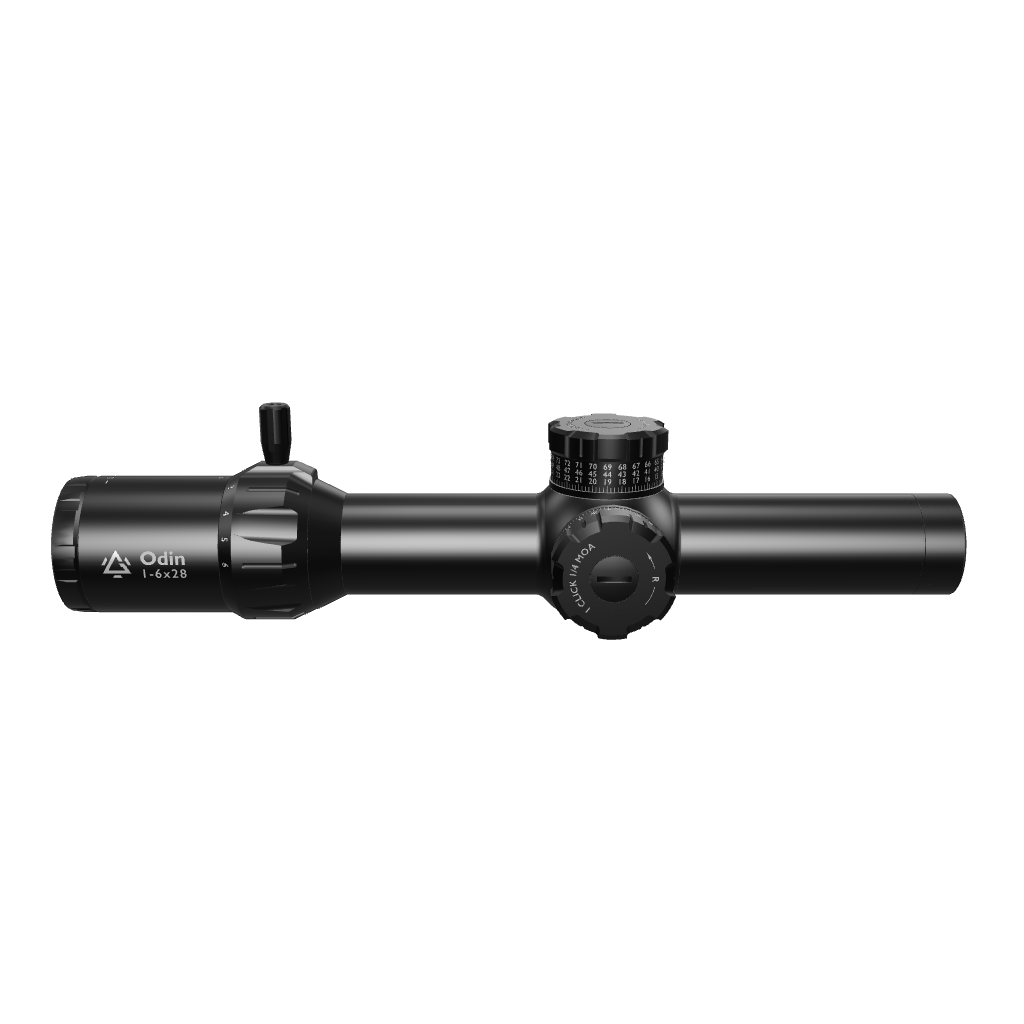

1-6x vs. 1-8x LPVO: How to Choose

The mistake most people make when choosing between two LPVOs is to think that they are deciding between a " good” and a “better” optic. When you are deciding between a 1-6x and a 1-8x LPVO, you are deciding between different optics with two different performance priorities.
Both optics give you true 1x for close-range work, but that is basically as close as the similarities get. The real question is: how much do you actually gain (and give up) by going from 6x to 8x?
What you should keep in mind is this:
- A 1-6x is typically about speed, simplicity, and consistency
- A 1-8x is about extended capability and target identification at distance
Your choice should come down to how far you realistically shoot, how fast you need to engage, and how much complexity you’re willing to manage.

1-6x vs. 1-8x LPVO: How to Choose
1. When to Choose a 1-6x LPVO
If you primarily shoot inside 300 yards, care more about speed and responsiveness than long-range accuracy, go for a 1-6x LPVO over a 1-8x LPVO.
1-6x LPVOs are the most practical choice for most users. It does 90% of what people actually need, without overcomplicating things. A 1-6x LPVO is perfect if you want a lighter, more balanced rifle.
2. When to Choose a 1-8x LPVO
If you regularly shoot past 300-400 yards, and you need better target identification at distance, go for a 1-8x LPVO over a 1-6x LPVO. The extended magnification range will help you stretch your rifle's capabilities and give you more reach.
Also, choosing the 1-8x LPVO should be the capability-driven choice. It gives you more room to grow, especially if distance is part of your use case.
 Top Uses of a 1-6x LPVO
The 1-6x LPVO has earned its reputation as the best tactical LPVO because it hits a very practical sweet spot. For many shooters, it’s all they’ll ever need.
1. Close to Mid-Range Engagements (0–300 yards)
In close-range applications, a 1-6x LPVO excels at versatility and efficiency. At 1x, you get near red-dot speed. At 4–6x, you have more than enough magnification for typical mid-range shots. The key advantage is efficiency: faster transitions, a wider field of view, and less over-magnification. Choose it over a 1-8x LPVO if:
- You rarely go past 300 yards
- You are a defensive or duty-oriented user
- You generally prioritize speed over precision
A 1-8x can do this too, but it’s often more scope than you need, with trade-offs in weight and simplicity.
2. Run-and-Gun / Dynamic Shooting
In dynamic environments, you’re constantly changing positions, engaging targets at varying distances, and prioritizing speed. A 1-6x keeps things streamlined: you get less eye box sensitivity (generally), faster acquisition, and a lighter setup.
Choose a 1-6x if:
- You are a competitive shooter (2-gun / 3-gun style)
- You are into tactical training.
- If you value speed under pressure
A 1-8x can feel slightly slower or more finicky when you're moving fast.
3. Lightweight, General-Purpose Rifle Builds
Most 1-6x LPVOs are lighter, more compact, and less demanding on balance. This matters if you’re building a rifle meant to “do everything” without becoming front-heavy. Choose a 1-6x LPVO if you are building a versatile AR setup or if you care about weight and handling.
Best Uses of a 1-8x LPVO
A 1-8x LPVO starts to make more sense when your shooting extends beyond the typical envelope. That extra 2x magnification doesn’t sound like much, but it makes a real difference in target identification, shot placement, and reading impacts.
At a distance, 8x gives you more visual information, which translates into better decision-making.
1. Extended Mid-Range to Long-Range Shooting (300–600+ yards)
Who should choose it over 1-6x:
- Shooters regularly engaging beyond 300–400 yards
- Rural or open-terrain users
- Precision-oriented shooters using LPVO platforms
2. Target Identification and Observation
Sometimes it’s not about taking the shot, it’s about identifying what you’re looking at and confirming details before engaging
A 1-8x provides better clarity at distance, which means you can have more confidence in what you’re seeing. This is crucial if you are a hunter, property/ranch user, or a shooter in an environment with longer sightlines.
3. Stretching the Capability of a Single Rifle
If you want one rifle to cover close-range work, mid-range engagements, and occasional long-range shots, a 1-8x gives you that extra reach without stepping into a dedicated long-range optic.
A 1-8x LPVO is great if you want a:
- A “do-it-all” rifle user leaning toward distance
- A shooter who does not want to outgrow their optic
- If you are comfortable managing slightly more complexity
1-6x vs. 1-8x LPVO: Use Comparison Table
| Use Case | 1-6x LPVO Advantage | 1-8x LPVO Advantage |
| Close-range (0–100 yards) | Faster, wider field of view | Comparable, but no real advantage |
| Mid-range (100–300 yards) | Efficient, simple, plenty of magnification | Slight edge in detail |
| Extended range (300–600+ yards) | Usable, but limited | Clear advantage in clarity and precision |
| Dynamic shooting | Faster handling, better transitions | Slightly slower, more sensitive |
| Target identification | Adequate | Significantly better |
| Weight and handling | Lighter, more balanced | Heavier, more complex |
| Versatility (distance-focused) | Good | Better |
| Simplicity | Strong advantage | More to manage |
Final Takeaway
The difference between 1-6x and 1-8x LPVOs isn’t just magnification, it’s intent.
- Go 1-6x if your priority is speed, simplicity, and real-world practicality
- Go 1-8x if your priority is flexibility, identification, and extended range
If you’re honest about how you actually shoot, not just what sounds good on paper, the right choice becomes pretty obvious.
You might be interested in a complete guide on LPVO effective range and how far each of these optics can shoot.