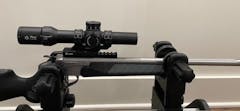
Cantilever Scope Mount
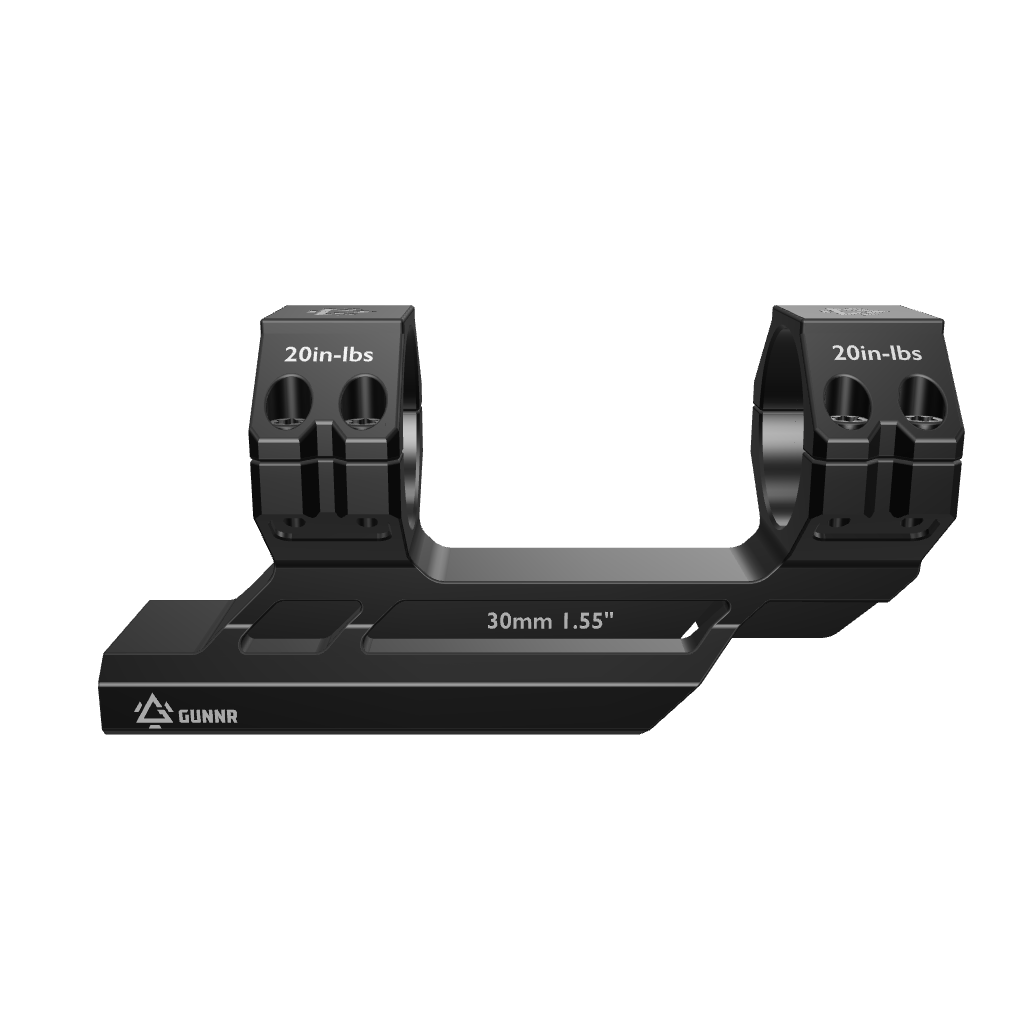
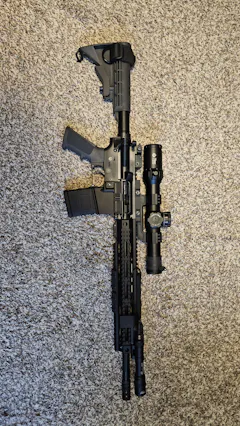
A cantilever scope mount is a specialized type of rifle optic mount designed to extend the scope forward from the base, rather than positioning it directly above the mounting rail. This forward offset is especially useful on modern sporting rifles like AR-platform firearms, where proper eye relief can be difficult to achieve with standard scope rings.
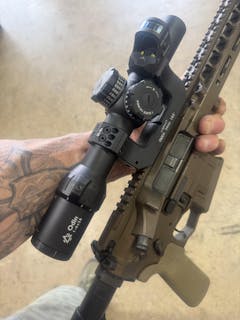
A cantilever scope mount has one-piece construction with a built-in forward extension. This design allows shooters to position the scope at the optimal distance from their eye without needing to move the mounting position too far back on the rail. As a result, it improves shooting comfort, ensures a consistent cheek weld, and enhances overall accuracy.
Cantilever mounts are commonly used with Picatinny or Weaver rails and are available in various sizes, such as 30mm or 34mm, to match different scope tube diameters. Many models also come with additional features like quick-detach levers, integrated bubble levels, or even top-mounted platforms for attaching accessories like red dot sights.
Compared to traditional scope rings, a cantilever mount offers better alignment and easier installation, as both rings are part of a single unit. This reduces the chances of misalignment and simplifies the mounting process, making it a popular choice for both beginners and experienced shooters.
One Piece Scope Mount
A one piece scope mount is a unified mounting system that integrates both scope rings and the base into a single solid structure. Unlike traditional two-ring setups, where each ring is installed separately, a one piece mount ensures perfect alignment between the rings right out of the box, reducing setup complexity and minimizing the risk of scope damage caused by uneven pressure.
One of the biggest advantages of a one piece scope mount is its strength and stability. Because the entire mount is machined as a single unit—often from aircraft-grade aluminum or steel—it provides excellent rigidity under recoil. This makes it especially suitable for high-caliber rifles or precision shooting applications where maintaining zero is critical.
Installation is also more straightforward. With fewer components to align, shooters can mount their optic more quickly and with greater confidence. Most one piece mounts are designed to attach directly to Picatinny or Weaver rails, offering a secure and repeatable fit. Many models include features such as quick-detach (QD) levers, built-in cant (e.g., 20 MOA) for long-range shooting, or even integrated bubble levels to assist with proper rifle leveling.
Compared to separate rings, a one piece scope mount often provides better durability and consistency, though it may be slightly heavier. It is commonly used on platforms like bolt-action rifles and AR-style rifles, particularly when precision and ease of setup are priorities.
Scope Rings
Scope rings are two separate circular clamps used to attach a riflescope to a rail or directly to the rifle. They are one of the most common and traditional mounting options. Each ring is installed individually, which allows flexible positioning of the scope on the rifle.
Scope Rings vs Scope Mount
Scope rings are separate pieces that require alignment during installation, while a scope mount is usually a single-piece system that holds both rings together. Rings offer more customization and lighter weight, while mounts provide easier installation and better alignment out of the box. Mounts are often preferred for tactical setups, while rings are common on hunting rifles.
Direct Mount Scope Rings
Direct mount scope rings attach straight to rifles that have built-in mounting points, such as dovetail rails. They do not require an additional base or rail system. This creates a simple, low-profile setup that is lightweight and stable, but only works with compatible rifle designs.
Low Mount Scope Rings
Low mount scope rings keep the scope close to the barrel for a tighter and more natural shooting position. They are ideal for smaller objective lenses and help improve cheek weld and stability. However, they may not fit larger scopes that need more clearance.
High Mount Scope Rings
High mount scope rings raise the scope higher above the rifle, giving extra clearance for large objective lenses or rifle accessories. They are commonly used on AR-style rifles or setups with raised rails. While they improve compatibility, they can slightly reduce comfort if the cheek weld is not adjusted properly.
Quick Detach / Release Scope Mount
A Quick Detach (QD) or Quick Release scope mount is a mounting system designed to allow a riflescope to be quickly installed or removed from a firearm without losing zero. It typically uses a lever mechanism instead of traditional screws, making the process faster and more convenient.
QD mounts are especially useful for shooters who switch between optics, use backup iron sights, or need to transport their rifle with the scope removed. High-quality QD systems are engineered to return to the same position on the rail (such as Picatinny or Weaver) when reattached, helping maintain consistent accuracy.
These mounts are commonly made from durable materials like aircraft-grade aluminum to ensure strength under recoil. Many models also feature adjustable tension levers, allowing users to fine-tune the fit for a secure and repeatable lock on the rail.
Offset Scope Mount
An offset scope mount is a mounting solution that positions an optic slightly to the side of the rifle’s main rail rather than directly above it. This angled or lateral placement allows shooters to switch quickly between a primary optic (like a magnified scope) and a secondary sighting system without removing or adjusting equipment.
Offset mounts are commonly used to pair a riflescope with backup iron sights or a red dot sight. For example, a shooter might use a magnified scope for long-range targets and an offset red dot for close-range engagements, simply by canting the rifle slightly.
These mounts are typically installed at a 45-degree angle and are made from lightweight but durable materials like aluminum. They attach to standard Picatinny or Weaver rails and are available in different configurations depending on whether they are designed for red dots, scopes, or accessories.
Dovetail / Tip-Off Scope Mount
A dovetail or tip-off scope mount is a mounting system designed to attach optics to rifles that feature a dovetail-style rail, which is a narrow rail with sloped sides commonly found on rimfire rifles and air rifles.
The term “tip-off” comes from the ability to “tip off” or quickly remove the scope in some setups, depending on the ring design. However, most modern dovetail mounts are fixed or use simple clamp systems for stability rather than true quick-detach removal.
Dovetail mounts are valued for their simplicity, lightweight design, and low-profile fit. They sit closer to the receiver compared to Picatinny-based systems, helping maintain a compact shooting setup. This makes them especially popular for .22 rifles, pellet guns, and small-game hunting rifles where recoil is minimal and precision at moderate ranges is the priority.
They are typically available in different ring heights (low, medium, high) and are sized to fit common scope tube diameters such as 1 inch or 30mm. Installation is straightforward, but proper alignment is important because dovetail rails do not offer the same modular flexibility as Picatinny systems.
Picatinny / Weaver Scope Mount
A Picatinny or Weaver scope mount is one of the most common mounting systems used to attach rifle optics to a firearm. It connects a scope (or scope rings/mount) to a standardized rail system that runs along the top of the rifle, providing a secure and repeatable platform for optics.
The Picatinny rail (also known as MIL-STD-1913) features evenly spaced slots with precise dimensions, allowing accessories to be mounted at fixed intervals. The Weaver rail is similar but has slightly different slot spacing and is less standardized. Because of this, most modern mounts are designed to be compatible with both systems.
These mounts are widely used because they offer strong stability, easy installation, and high compatibility with a wide range of optics and accessories. Scope rings or one-piece mounts attach directly to the rail using cross-bolts or clamp systems, ensuring a solid lock even under heavy recoil.
Picatinny/Weaver mounts are commonly found on AR-style rifles, tactical rifles, and hunting rifles where flexibility and durability are important. They also make it easy to reposition optics for optimal eye relief and shooting comfort.
Specialty Mount
Specialty mounts refer to non-standard scope mounting systems designed for specific rifle platforms, shooting styles, or unique optic configurations. Unlike universal Picatinny or ring systems, these mounts are purpose-built to solve particular alignment, clearance, or ergonomics challenges.
Scout Scope Mount
A scout scope mount positions the scope forward on the rifle’s receiver or barrel, rather than above the action. This setup is designed for scout-style rifles and allows for both-eyes-open shooting with extended eye relief scopes. It also keeps the action area clear for fast loading.
See Through Scope Mount
A see through scope mount raises the scope high enough so the shooter can still use the rifle’s iron sights underneath. This provides a backup aiming option without removing the optic, although it can slightly reduce cheek weld consistency and shooting comfort.
Claw Mount Scope
A claw mount scope uses spring-loaded “claws” or locking arms to attach the optic to the rifle, commonly found on European hunting rifles. It is known for being strong, repeatable, and often removable without losing zero when properly fitted.
Saddle Scope Mount
A saddle scope mount wraps around the top of the rifle like a saddle, distributing pressure evenly across the receiver. This design is often used on air rifles or specialty hunting rifles where stability and alignment are important.
Bridge Scope Mount
A bridge scope mount connects two separate mounting points with a raised bridge structure. This design improves rigidity and alignment, especially on rifles where rail spacing is limited or uneven. It helps maintain consistent scope positioning under recoil.
Diving Board Scope Mount
A diving board scope mount extends a forward platform in front of the main optic, resembling a diving board shape. It is commonly used to mount accessories like red dots, lasers, or rangefinders in front of or offset from the primary scope, improving multi-optic setups.