Fixed Power vs Variable Power Rifle Scope
Fixed power rifle scopes and variable power rifle scopes differ mainly in how much magnification control they offer, and this difference directly affects how they perform in real shooting situations.
A fixed power rifle scope has a single, unchangeable magnification level, such as 4x or 6x. This means the image is always zoomed at the same level, with no adjustment needed. Because of this simplicity, fixed scopes are often very durable and reliable. With fewer moving parts, they are less likely to lose zero or malfunction in harsh conditions. They also tend to be lighter and sometimes offer slightly clearer optics at their set magnification. However, the biggest limitation is flexibility. If your target distance changes, you cannot adjust the zoom, which can make them less practical in varied environments.
In contrast, a variable power rifle scope allows you to adjust magnification within a range, such as 3–9x or 4–16x. This makes them highly versatile, since you can zoom out for close-range targets and zoom in for distant shots. This adaptability is especially useful for hunting or tactical shooting, where distances are not always predictable. Variable scopes are now the most commonly used type because they offer a balance between close-range speed and long-range precision. However, they are generally more complex, slightly heavier, and more expensive than fixed power scopes. In some cases, image clarity can also vary slightly depending on the zoom level.
First Focal Plane (FFP) vs. Second Focal Plane (SFP) Scopes
First Focal Plane (FFP) and Second Focal Plane (SFP) scopes mainly differ in how the reticle behaves when you change magnification, and this affects how you aim, estimate distance, and hold for wind or drop.
A First Focal Plane (FFP) scope has a reticle that changes size as you zoom in or out. When you increase magnification, both the target and the reticle grow proportionally; when you zoom out, both shrink together. The key advantage of this design is that the reticle’s measurements (such as holdover marks or mil-dots) remain accurate at every magnification level. This makes FFP scopes especially useful for long-range shooting, precision shooting, and tactical applications where you may need to adjust magnification frequently without losing ballistic accuracy. The downside is that at low magnification, the reticle can appear very small, and at high magnification it can look quite bold or busy.
A Second Focal Plane (SFP) scope, on the other hand, keeps the reticle the same size no matter how much you zoom. The target becomes larger or smaller, but the reticle stays visually constant. This makes SFP scopes easier to use in many hunting situations because the reticle is always clearly visible and uncluttered. However, the trade-off is that the reticle’s holdover values are only accurate at one specific magnification level (often the highest or a marked setting). If you change magnification, those reference points are no longer mathematically precise, which can matter more in long-range shooting.
Illuminated Rifle Scopes
An illuminated rifle scope is a type of scope that features a reticle with built-in lighting, typically in red or green, designed to improve visibility in low-light or high-contrast environments. The illumination helps the shooter see the crosshair more clearly against dark backgrounds such as dense forests, shadows, or during dawn and dusk hunting conditions when natural light is limited. This makes target acquisition faster and more precise in situations where a standard black reticle might be difficult to see.
The brightness of the illuminated reticle is usually adjustable, allowing the shooter to match it to the surrounding light conditions. Lower settings are used for darker environments to avoid overpowering the target view, while higher settings can help in brighter conditions or against complex backgrounds. Many illuminated scopes also include multiple color options, with red being the most common and green often preferred in certain outdoor lighting conditions because it can appear sharper to the human eye.
Illuminated rifle scopes are especially popular among hunters and tactical shooters who operate in variable lighting environments. They are not necessarily intended to replace night vision or thermal optics, but rather to enhance visibility during transitional light conditions.
Thermal Rifle Scope
A thermal rifle scope is an advanced type of optic that detects heat signatures rather than relying on visible light. Instead of forming an image from daylight or infrared illumination, it creates a visual representation based on temperature differences between objects. Warm bodies, such as animals or humans, appear as bright shapes against cooler backgrounds like trees, ground, or water. This makes thermal scopes extremely effective in complete darkness, fog, smoke, or dense vegetation where traditional optics and even night vision can struggle.
One of the biggest advantages of thermal rifle scopes is their ability to work in all lighting conditions, including total darkness. They are widely used for night hunting, wildlife tracking, search and rescue operations, and tactical applications. Because they detect heat rather than light, they can also help spot hidden or partially concealed targets that would otherwise blend into the environment.
However, thermal scopes also have limitations. They are generally more expensive than standard or night vision scopes, and the image they produce is less detailed in terms of fine features like facial recognition or precise object identification. Instead, they prioritize heat contrast and movement.
Night Vision Rifle Scope
A night vision rifle scope is an optical device designed to help shooters see and aim in low-light or nighttime conditions by amplifying available light. Instead of detecting heat like thermal scopes, night vision scopes work by collecting small amounts of ambient light—such as moonlight or starlight—and enhancing it through an image intensifier. The result is a clearer, brighter green or black-and-white image that allows the shooter to see targets in the dark.
Night vision scopes are especially useful in environments where there is at least some light present, even if it is very minimal. Many modern models also include an infrared (IR) illuminator, which acts like a built-in invisible flashlight, improving visibility in total darkness.
Compared to thermal scopes, night vision optics provide more detailed images, allowing users to recognize features such as animals, terrain, and objects more clearly. However, they do not perform well in complete darkness without IR assistance, and they can be affected by weather conditions like fog or heavy rain. Bright light exposure can also temporarily overwhelm or damage some older night vision devices.
Red Dot / Reflex Rifle Scope
A red dot or reflex rifle scope is a non-magnified (or very low-magnification) optic designed for fast target acquisition at close to medium range. Instead of using traditional crosshairs and zoom, it projects a red illuminated dot (or similar aiming point) onto a lens. The shooter simply places the dot on the target and fires, which makes aiming quick and intuitive, especially in fast-moving situations.
Red dot and reflex sights are widely used because they allow for both eyes open shooting, which improves situational awareness. This is particularly useful in dynamic environments such as tactical shooting, close-range hunting, or competitive shooting. Since there is no or minimal magnification, these optics are excellent for tracking moving targets and reacting quickly rather than focusing on long-distance precision.
Reflex sights are generally more compact and lightweight than traditional rifle scopes, which makes them ideal for rifles where speed and mobility matter more than long-range accuracy. They are also easier to use for beginners because there is no need to align reticle patterns or adjust magnification settings. However, their main limitation is range—they are not suitable for long-distance shooting where magnification is required for precision aiming.
LPVO Scopes vs HPVO Rifle Scope
LPVO (Low Power Variable Optic) and HPVO (High Power Variable Optic) scopes are both variable magnification rifle optics, but they are designed for very different shooting ranges and purposes.
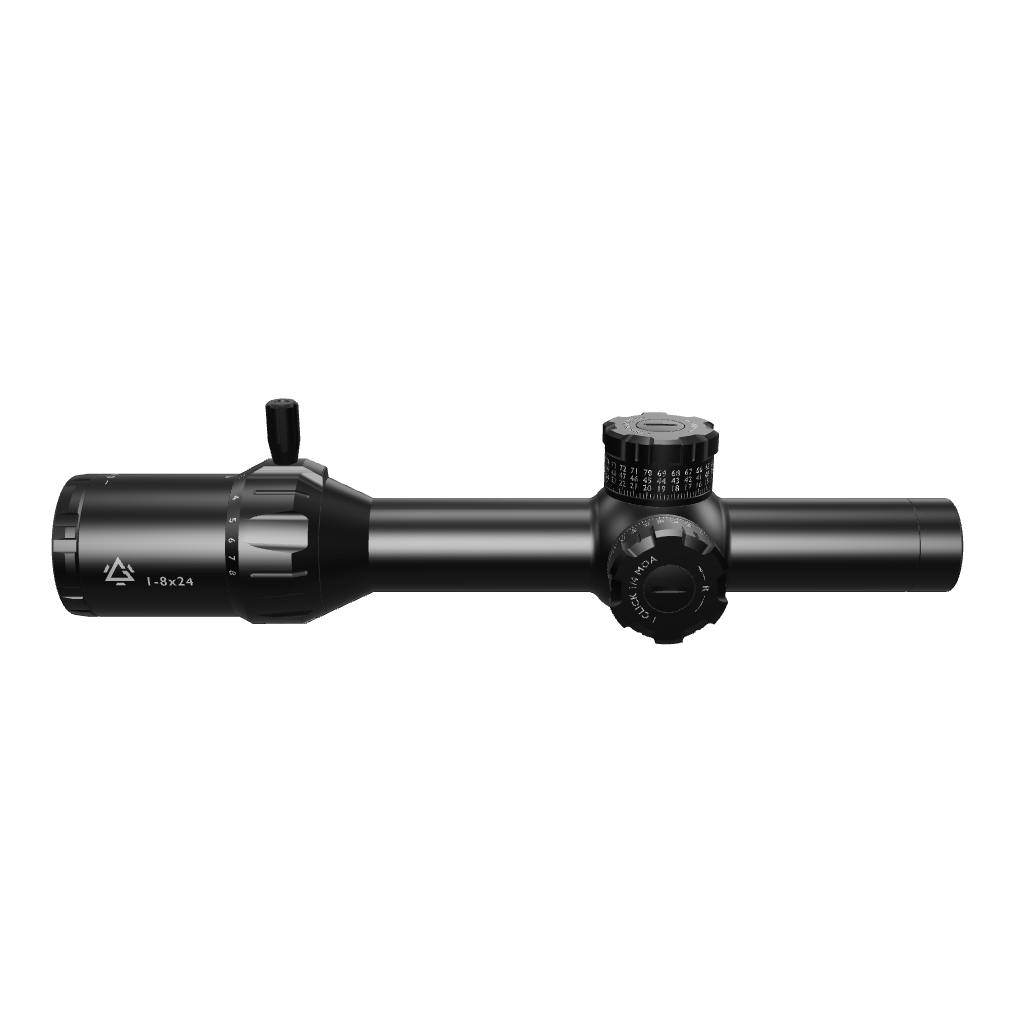
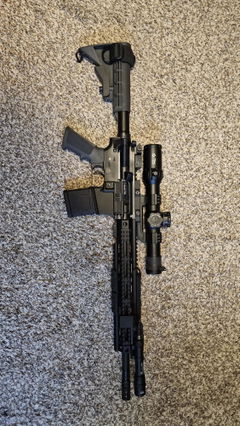
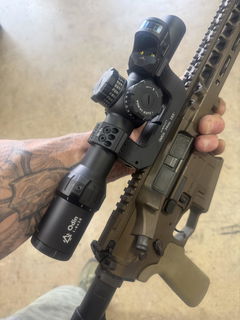
An LPVO (Low Power Variable Optic) typically offers a low magnification range such as 1–4x, 1–6x, 1–8x, or 1–10x. At the lowest setting (often 1x), it behaves almost like a red dot sight, allowing for fast target acquisition at close range with both eyes open. When zoomed in, it provides enough magnification for mid-range shooting. This flexibility makes LPVOs extremely popular for tactical use, AR-platform rifles, and general-purpose shooting where targets may appear at varying distances.
An HPVO (High Power Variable Optic), on the other hand, is designed for longer distances and typically starts at a higher magnification level, such as 3–12x, 4–16x, 5–25x, or even higher. These scopes sacrifice close-range speed in exchange for better precision at extended distances. HPVOs are commonly used in long-range hunting, precision rifle competitions, and target shooting where accuracy at distance is the priority.
Hunting Rifle Scopes vs Tactical Rifle Scopes
Hunting rifle scopes are designed for real-world outdoor conditions where targets are often animals that may appear suddenly, move quickly, and be at varying distances. These scopes prioritize simplicity, reliability, and fast target acquisition over complex adjustments.
Most hunting scopes use moderate magnification ranges such as 3–9x or 3–12x, which are ideal for forested areas, open fields, and mixed terrain. They are usually lighter in weight, making them easier to carry during long hunting trips. Good low-light performance is also important because hunting often happens at dawn or dusk when visibility is limited.
Tactical rifle scopes are built for precision, adaptability, and fast adjustments under changing conditions. They are commonly used in law enforcement, military-style training, and precision shooting sports.
These scopes often include advanced features such as exposed elevation and windage turrets, first focal plane (FFP) reticles, and illuminated markings for rapid corrections. Magnification ranges are usually higher and more flexible, such as 4–16x, 5–25x, or LPVO designs like 1–8x for close-to-mid range tactical use.
Hunting scopes focus on speed, simplicity, and field practicality, while tactical scopes focus on precision, control, and adaptability.


![Odin ED 1-6×28 Engraved FFP LPVO Rifle Scope [Custom Engraving]](http://gogunnr.com/cdn/shop/files/24906867364_177653999878_2_1370x.jpg?v=1745579694)
![Odin ED 1-6×28 Engraved FFP LPVO Rifle Scope [Custom Engraving]](http://gogunnr.com/cdn/shop/files/gunnr_940x.png?v=1745579694)